Why a Used Phone Can Pass an IMEI Check and Still Have Network Problems
You check a used smartphone before buying it.
The IMEI looks correct. The model matches. The device is not blacklisted.
Everything seems fine.
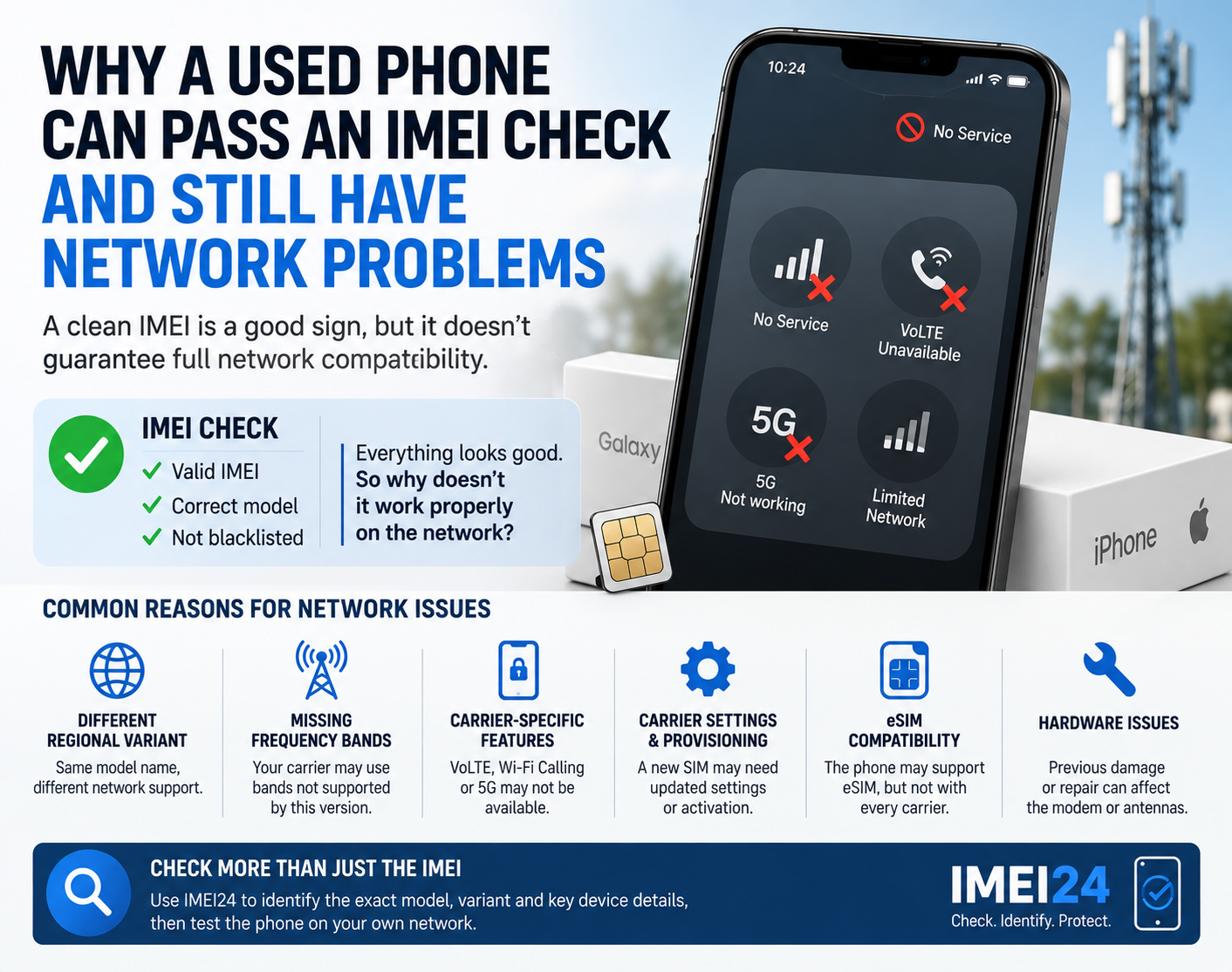
Then you insert your SIM card and discover that mobile data is unstable, 5G does not work, VoLTE is missing, or the phone keeps showing No Service.
How can that happen if the IMEI check passed?
Because an IMEI check and network compatibility are two different things.
A clean IMEI does not guarantee perfect network compatibility
An IMEI check can help you identify important information about a smartphone.
Depending on the device and available records, IMEI24 may help confirm:
* manufacturer
* exact model
* Product Name
* SKU
* storage
* regional or device variant
* blacklist status
That is extremely useful when checking a second-hand phone.
But it does not mean that the device will automatically work perfectly with every mobile operator.
A phone can have a completely normal IMEI and still have problems with the network.
Why?
Because network compatibility depends on more than the IMEI.
It can also depend on:
* supported frequency bands
* exact regional version
* carrier certification
* VoLTE support
* Wi-Fi Calling support
* eSIM compatibility
* network provisioning
* software and carrier settings
The IMEI helps identify the device.
The operator decides how that device can use its network.
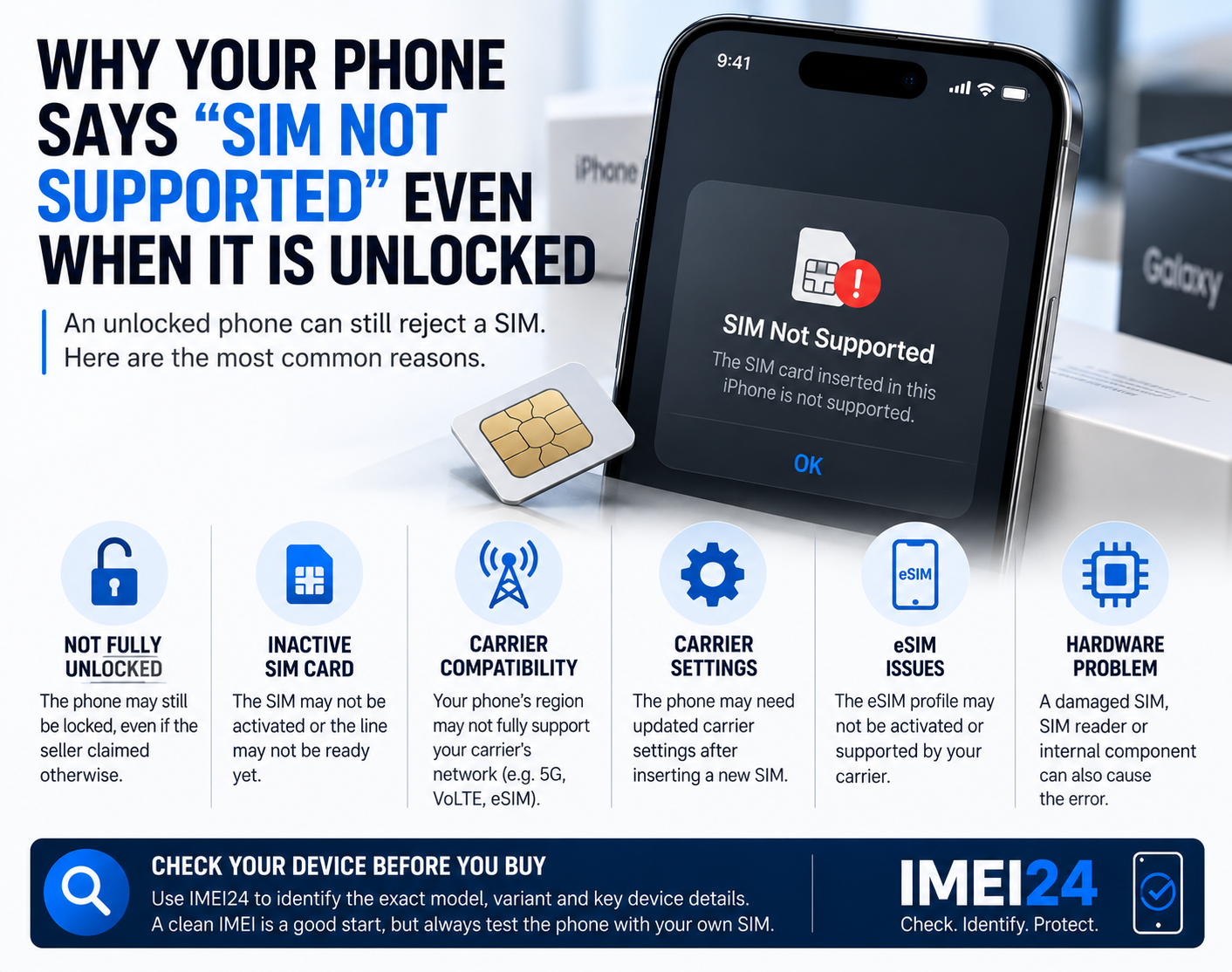
An unlocked phone is not the same as a universally compatible phone
This distinction causes a lot of confusion.
A SIM-unlocked phone can accept SIM cards from different operators.
That does not guarantee that every network feature will work.
Google confirms this with Pixel phones. An unlocked Pixel can be used with different carriers, but Google also notes that not every Pixel model supports every 5G network. The user may still need to confirm compatibility with the operator.
So:
Unlocked = the phone is not restricted to one carrier.
Compatible = the phone and carrier support the same technologies and network configuration.
Those are not the same thing.
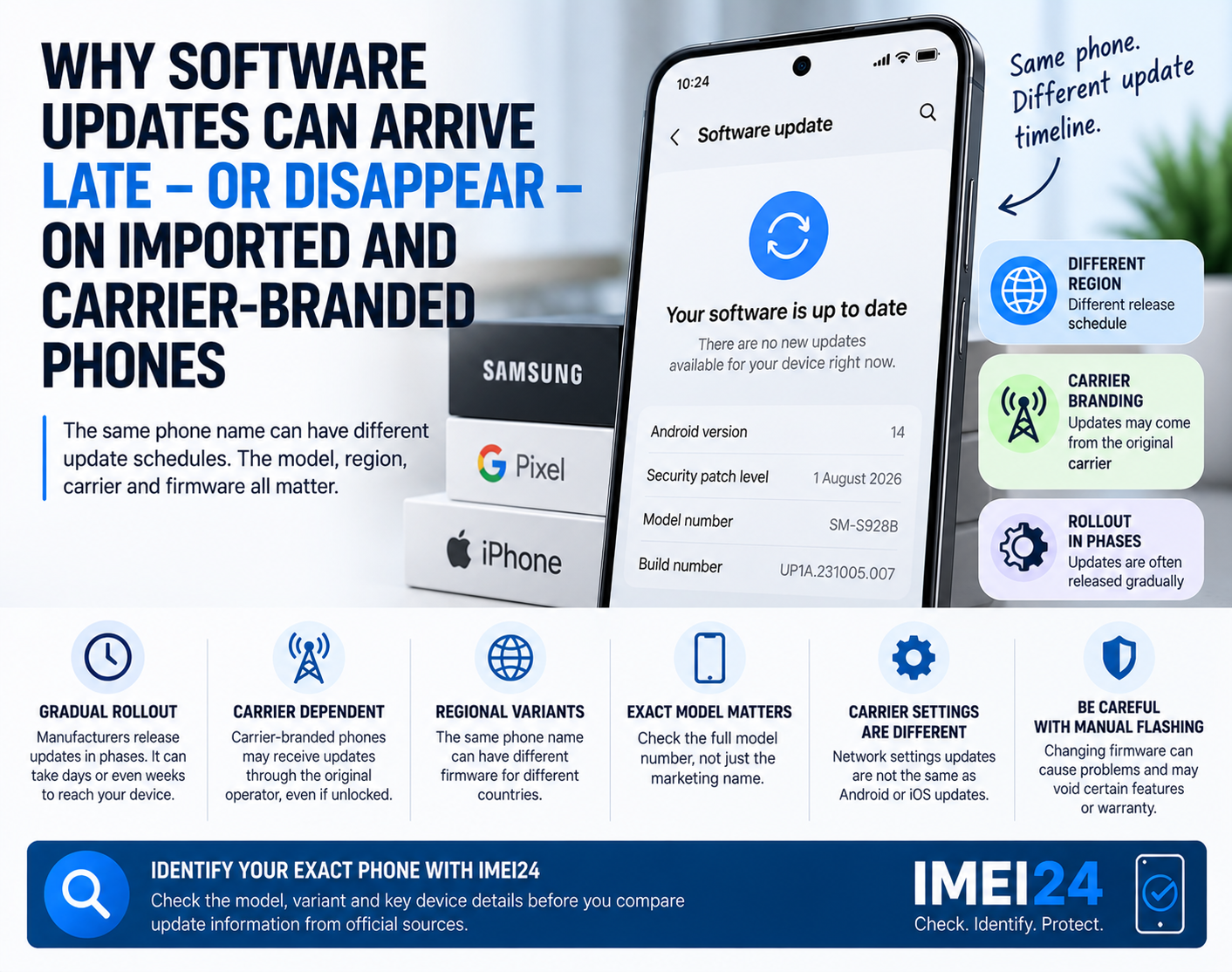
Regional variants can make a big difference
One of the most common causes of problems with used or imported phones is the regional variant.
Two phones can have exactly the same commercial name but still be designed for different markets.
For example, one version may be intended for:
* Europe
* United States
* China
* Japan
* another regional market
The differences may include:
* supported LTE or 5G bands
* eSIM configuration
* carrier profiles
* network certification
* software features
That means a phone can be genuine, unlocked and have a clean IMEI while still being a poor match for your local operator.
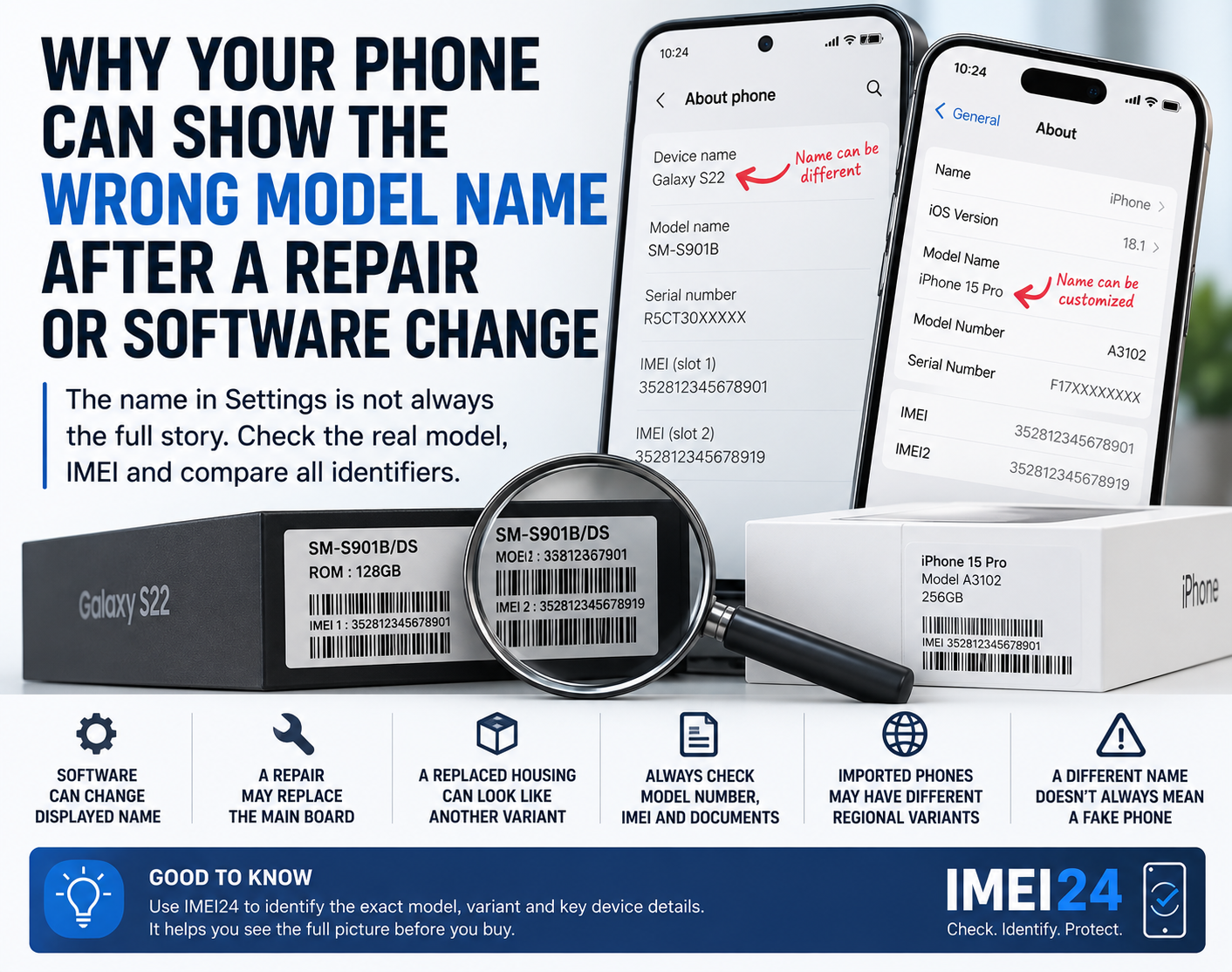
This is why the exact model matters
A seller may write:
Samsung Galaxy S25
or:
Google Pixel 10
That is not always enough information.
The exact model number or variant can be much more important than the marketing name.
Before buying an imported phone, it is worth identifying the exact version and comparing it with your operator's network support.
This is where an IMEI check becomes particularly useful.
IMEI24 can help identify the device more precisely, so you know what model or regional variant you actually need to investigate.
Mobile data working does not mean everything is compatible
Another common mistake is testing only internet access.
You insert your SIM.
4G appears.
A website loads.
The phone must be fully compatible, right?
Not necessarily.
The device may still have problems with:
* VoLTE
* Wi-Fi Calling
* 5G
* eSIM
* roaming
* voice calls on modern networks
Some of these functions depend on carrier support in addition to the phone's hardware.
That means basic LTE data can work while other network features remain unavailable.
The carrier account itself can also cause problems
Sometimes the phone is perfectly compatible.
The issue is on the operator's side.
Apple notes that account or carrier problems can prevent an iPhone from connecting correctly to the mobile network. Apple recommends confirming that the account is active, the device has the correct mobile plan, and there are no network restrictions or outages.
This is important when troubleshooting a recently purchased used phone.
A failed network connection does not immediately prove that the device itself is defective.
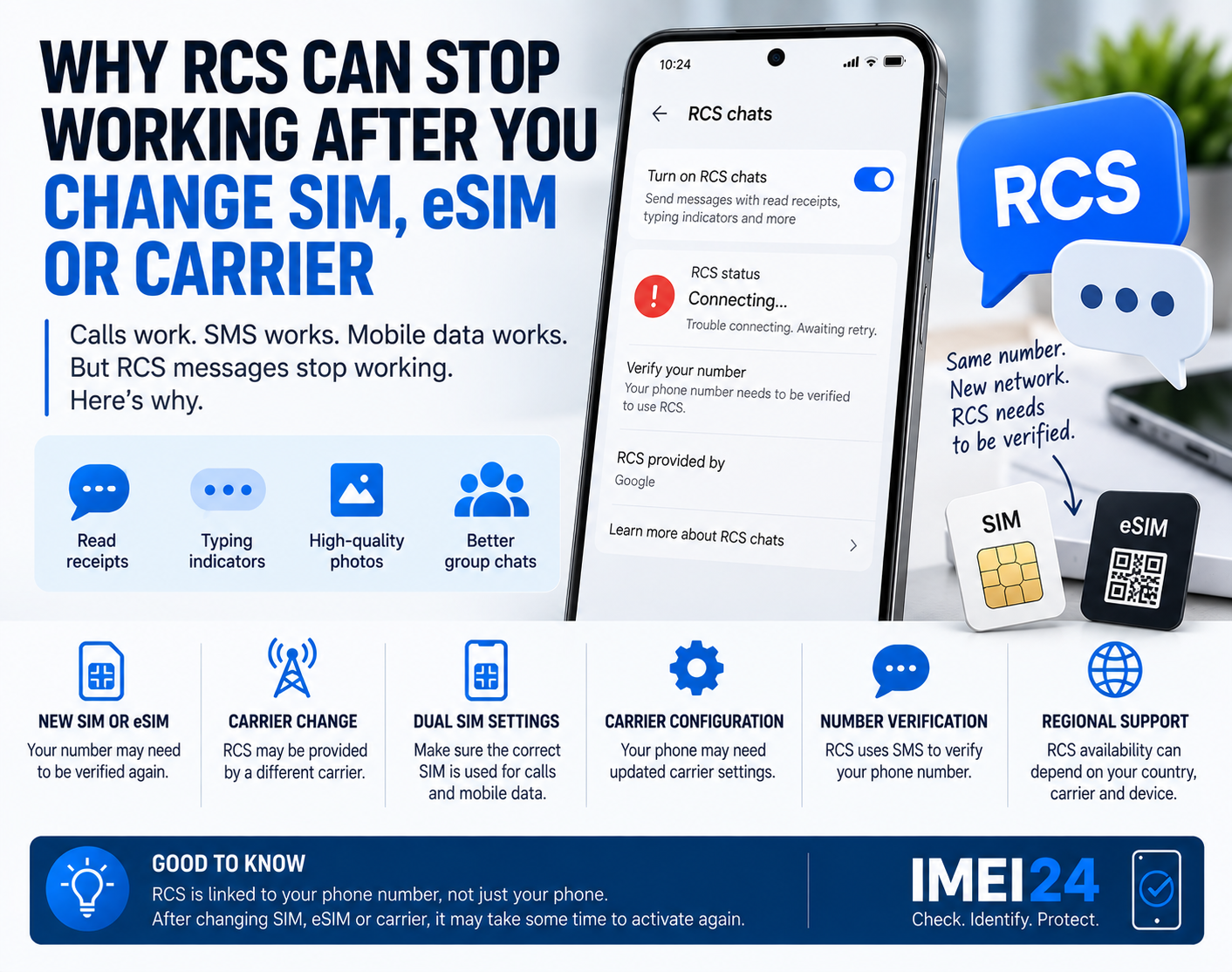
A new SIM may require new carrier settings
Carrier configuration can also change when you move your SIM to another device.
Apple specifically notes that after inserting a new SIM, the iPhone may need to download updated carrier settings.
These settings can affect how the phone connects to the mobile network.
So if a used phone behaves strangely immediately after inserting your SIM, check:
* software updates
* carrier settings
* SIM or eSIM activation
* account status
before assuming the phone is faulty.
eSIM adds another layer of compatibility
A phone may technically support eSIM, but that still does not guarantee that every operator will activate it on every regional version.
Apple confirms that cellular service options depend on the model, country and region, and eSIM activation also depends on carrier support.
This becomes particularly important with imported phones.
A device may have:
* a valid IMEI
* working Wi-Fi
* working physical SIM support
and still have limited eSIM functionality with your carrier.
Blacklist status is only one part of the check
Checking blacklist status is important when buying a used phone.
But it should not become the only test.
A phone that is not blacklisted can still have:
* regional compatibility problems
* damaged antennas
* SIM reader issues
* modem problems
* carrier configuration problems
* unsupported network features
A clean blacklist result answers one question:
Is there a known network restriction associated with this IMEI?
It does not answer every possible question about connectivity.
Hardware damage can also hide behind a clean IMEI
An IMEI lookup does not test the phone's antennas or modem performance.
A smartphone may have been:
* dropped
* exposed to liquid
* badly repaired
* fitted with damaged internal components
and still report a completely valid IMEI.
This is another reason why an IMEI check should be combined with a physical test of the device.
How should you test a used phone?
Before buying, insert your own SIM if possible.
Then test:
* normal voice call
* mobile data
* LTE or 5G connection
* SMS
* signal strength
* VoLTE if available
* Wi-Fi Calling if important to you
* eSIM if you plan to use it
Do not rely only on the seller showing you that the phone connects to Wi-Fi.
Wi-Fi tells you almost nothing about cellular network compatibility.
Check the exact model before blaming the carrier
If the phone has network problems, identify it properly first.
Compare:
* IMEI information
* model number
* regional variant
* original box
* system information
Then ask your operator whether that exact version is supported.
Apple itself advises users with imported iPhones to contact the carrier if local regulations or network requirements involve registration of an IMEI for devices purchased outside the country or region.
This shows how much network access can depend on local carrier and regulatory rules.
What should you check before buying?
A good used-phone check should include both identity and real-world functionality.
Verify:
* IMEI
* blacklist status
* exact model
* regional variant
* storage
* network compatibility
* SIM operation
* mobile data
* voice calls
* 5G if important
* VoLTE
* eSIM if needed
No single check replaces all the others.
A good IMEI result is the beginning, not the finish
A clean IMEI is good news.
It helps confirm that the device identity makes sense and can reveal useful information about the model and variant.
But it should never be treated as proof that the phone will work perfectly on every network.
The best approach is simple:
Use IMEI24 to identify the phone.
Then test the phone on the network you actually plan to use.
That combination tells you much more than either step alone.