Why VoLTE Can Stop Working After You Change Carriers
You change mobile carriers, insert a new SIM or activate a new eSIM, and everything seems fine.
Mobile data works.
Text messages arrive.
You can make calls.
But something has changed.
Calls take longer to connect. Mobile data may drop during a call. The phone may fall back to an older network, or the VoLTE option you used before may no longer appear at all.
This can happen even when the phone itself has not changed.
The reason is simple - VoLTE depends not only on the smartphone, but also on the carrier.
What is VoLTE?
VoLTE stands for Voice over LTE.
It allows voice calls to use the 4G LTE network instead of older mobile technologies.
In practical terms, VoLTE can provide:
* faster call setup
* better voice quality
* the ability to keep using LTE data during a call
* more efficient use of modern mobile networks
Google also notes that VoLTE lets supported Pixel phones handle voice calls, SMS and emergency communication over 4G instead of older network technologies.
Why can changing carriers affect VoLTE?
A phone does not decide by itself whether VoLTE is available.
The mobile operator also has to support it and allow the device to use it.
That means a phone can work perfectly with VoLTE on Carrier A and behave differently after you move the same device to Carrier B.
The new carrier may use:
* different network settings
* different provisioning rules
* different device compatibility policies
* different software or carrier profiles
So the fact that VoLTE worked yesterday does not guarantee that it will work automatically after switching networks.
VoLTE support is carrier-specific
Apple's own carrier support pages show that features such as VoLTE, Wi-Fi Calling, eSIM and 5G are listed separately for individual operators.
This is important.
Two carriers operating in the same country can support different sets of features on the same phone family. Apple currently lists VoLTE separately for supported operators and also notes that availability can depend on the carrier, model and region.
So when VoLTE disappears after changing carriers, it does not automatically mean that something is wrong with your phone.
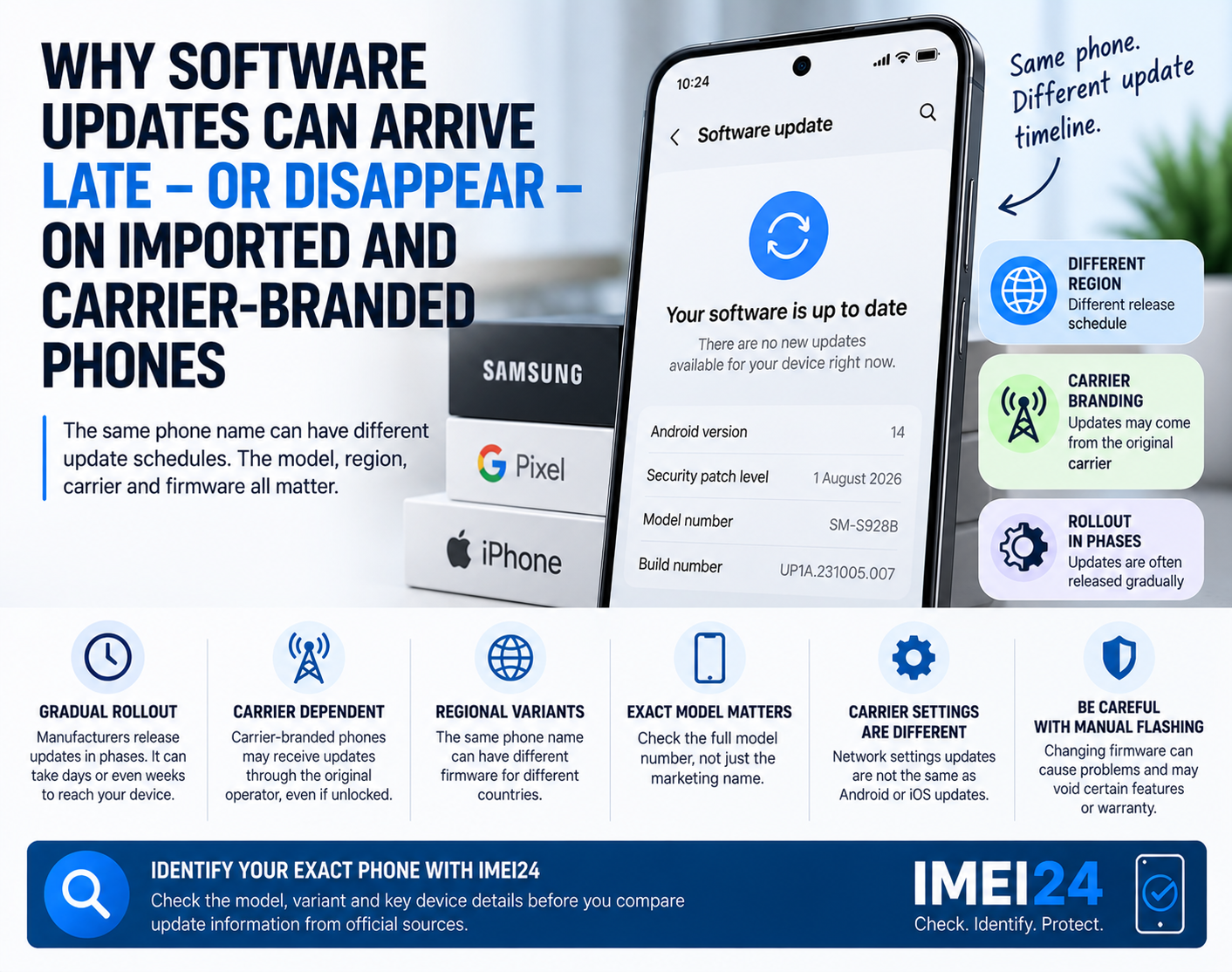
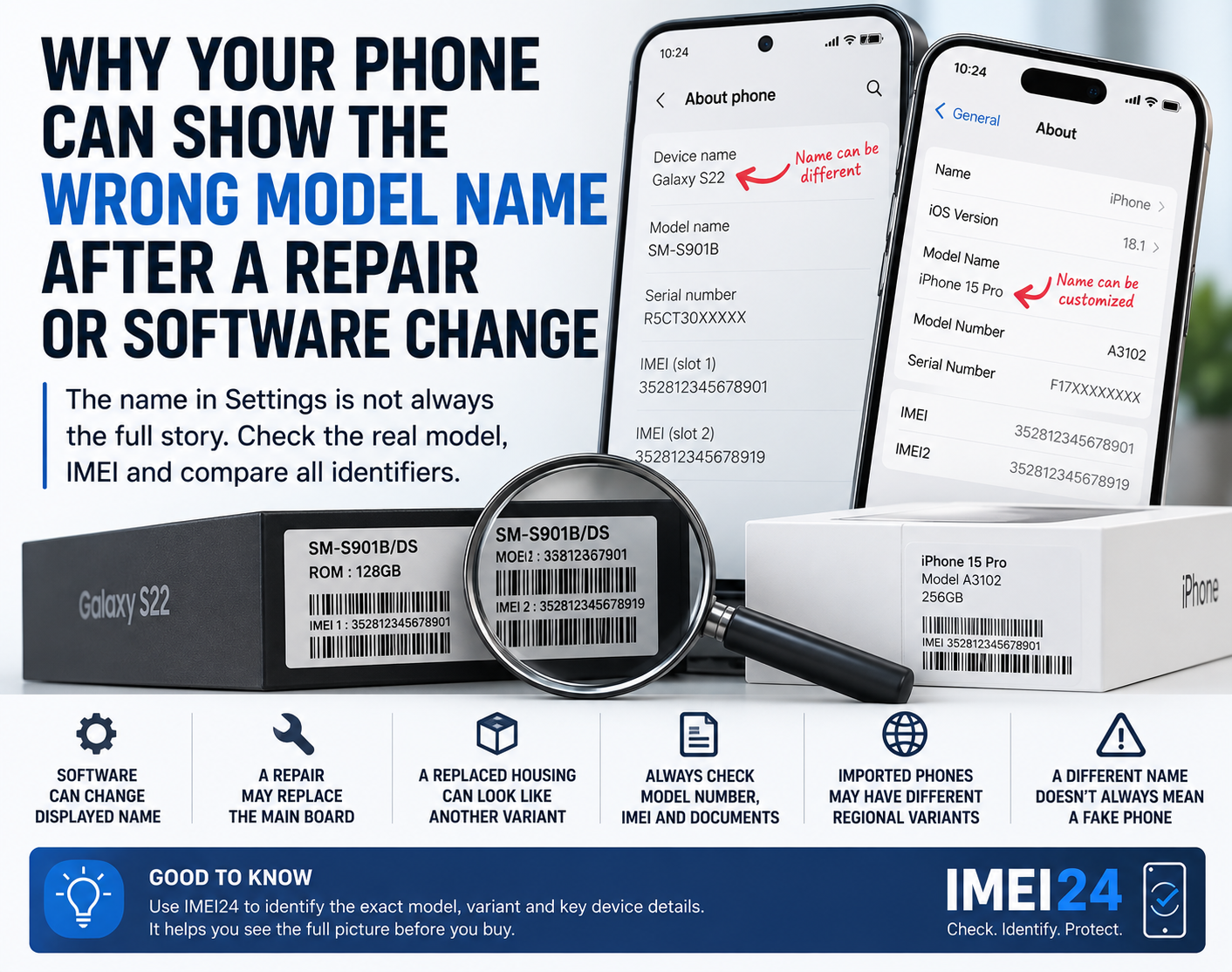
Your exact phone variant can matter
A smartphone name such as "Galaxy S25" or "iPhone" is often not precise enough.
Manufacturers sell different regional and carrier-specific versions of the same phone.
Those variants may differ in:
* modem configuration
* supported network profiles
* regional firmware
* carrier certification
* software configuration
This becomes especially important with imported phones.
A device that supports VoLTE technically may still not be supported in exactly the same way by every carrier.
If you are troubleshooting this kind of problem, identifying the exact model is much more useful than relying only on the commercial product name.
IMEI24 can help identify available information such as the exact model, Product Name, manufacturer, SKU, storage or regional/device variant.
That gives you better information to compare with your carrier's requirements.
The VoLTE setting may disappear
Some users look for a VoLTE switch and assume the feature is broken when they cannot find it.
That is not always true.
On supported Pixel phones, Google explains that the VoLTE setting can depend on the operator's network configuration and may be enabled or disabled based on carrier settings.
On other phones, VoLTE may be enabled automatically without showing a separate switch.
So a missing VoLTE button does not necessarily prove that VoLTE is unavailable.
You need to look at how the phone behaves during a call.
How can you tell whether VoLTE is working?
One simple test is to make a normal voice call while mobile data is enabled.
Watch the network indicator.
If the phone stays connected to LTE or 4G during the call and mobile data continues to work normally, VoLTE is probably active.
If the phone drops to an older network during the call, VoLTE may not be active.
The exact behavior depends on the phone, carrier and network.
On modern networks where older technologies are being reduced or retired, lack of VoLTE can become a much bigger problem than it was a few years ago.
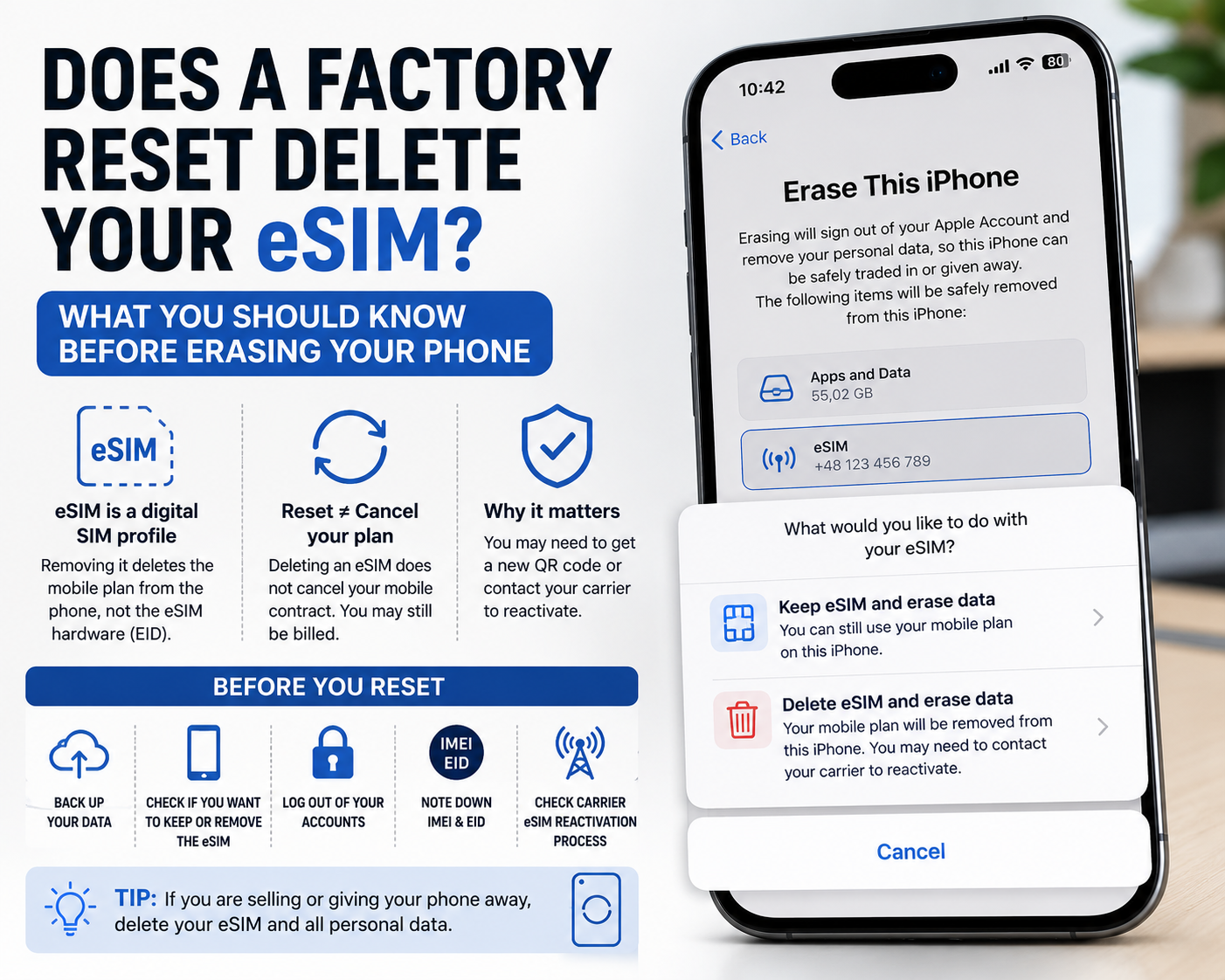
A new SIM or eSIM may need provisioning
VoLTE is not just a feature stored inside the handset.
The carrier may need to provision it on your account.
After switching operators, replacing a SIM or activating an eSIM, your line may not immediately receive the correct configuration.
This is especially worth checking if:
* VoLTE worked with your previous carrier
* the same phone is being used
* normal mobile data works
* calls still work but behave differently
* the problem started immediately after changing networks
In that situation, contacting the carrier may be more useful than changing random settings on the phone.
Carrier settings can also change phone behavior
On iPhone, carrier settings influence how the device connects to mobile networks and which features are available.
Apple notes that cellular options can vary depending on the iPhone model, carrier and region. This includes settings related to LTE, voice and data.
That means switching carriers can change the available network configuration even though you are still using exactly the same iPhone.
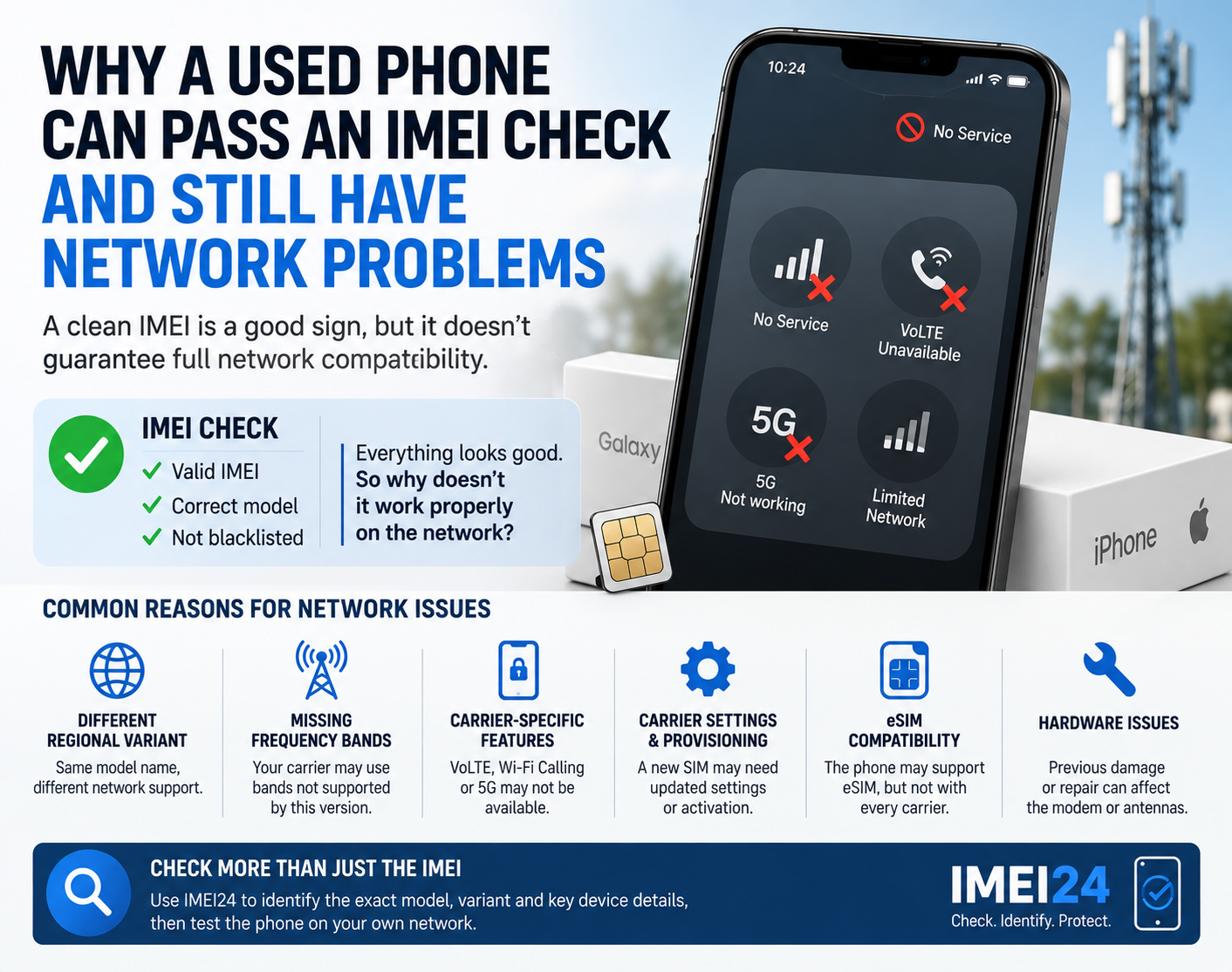
What if mobile data works but VoLTE does not?
This is completely possible.
LTE data support and VoLTE support are not the same thing.
A phone may connect to LTE for internet access but still fail to use LTE for voice calls.
That can happen because of:
* carrier provisioning
* unsupported device variant
* software configuration
* incorrect network profile
* incomplete SIM or eSIM activation
This is why saying "4G works, so VoLTE must work too" is not always correct.
Imported phones need extra attention
Imported smartphones deserve special care here.
The device may support the correct LTE frequencies and still have limited support for carrier-specific voice features.
This is similar to what happens with Wi-Fi Calling, but the underlying service is different.
Before assuming that the phone is faulty, check:
* exact model number
* regional variant
* software version
* carrier support
* whether VoLTE is active on your account
If the operator officially sells a different version of the same phone, that may explain why support behaves differently.
Do not start by changing firmware
When users lose VoLTE after switching carriers, one common internet suggestion is to flash firmware from another region.
That should not be your first step.
Changing firmware can create new problems and may affect:
* future updates
* network settings
* device stability
* stored data
First confirm whether the carrier officially supports your exact device variant.
If the network does not provision VoLTE for that model, changing a hidden setting may not solve anything.
What should you check first?
If VoLTE stops working after changing carriers, use this order:
* restart the phone
* confirm that the new SIM or eSIM is fully activated
* install current software updates
* check available VoLTE or Voice and Data settings
* identify the exact phone model and variant
* confirm with the carrier that VoLTE is supported for your device
* ask whether VoLTE is provisioned on your account
This is much more effective than repeatedly resetting the phone.
Why this problem matters more now
VoLTE is becoming increasingly important because mobile networks continue to move away from older voice technologies.
A phone that cannot use VoLTE may still appear functional today, especially where fallback networks are available.
But that does not mean the device is fully compatible with the carrier's long-term network.
This is one reason why VoLTE compatibility is worth checking before:
* switching operators
* importing a phone
* buying a used device
* moving to eSIM
* traveling with a regional smartphone variant
Same phone, different network experience
Changing carriers does not change the hardware inside your phone.
But it can change how that hardware is allowed to use the network.
That is why VoLTE can disappear even when LTE data still works perfectly.
If the problem starts immediately after switching networks, do not assume the phone is broken.
Check the exact model, the carrier's VoLTE support and the provisioning of your new line.
In many cases, the difference is not the phone.
It is the relationship between the phone and the network.