Why Repair Shops Ask for Your IMEI - and When It's Safe to Share It
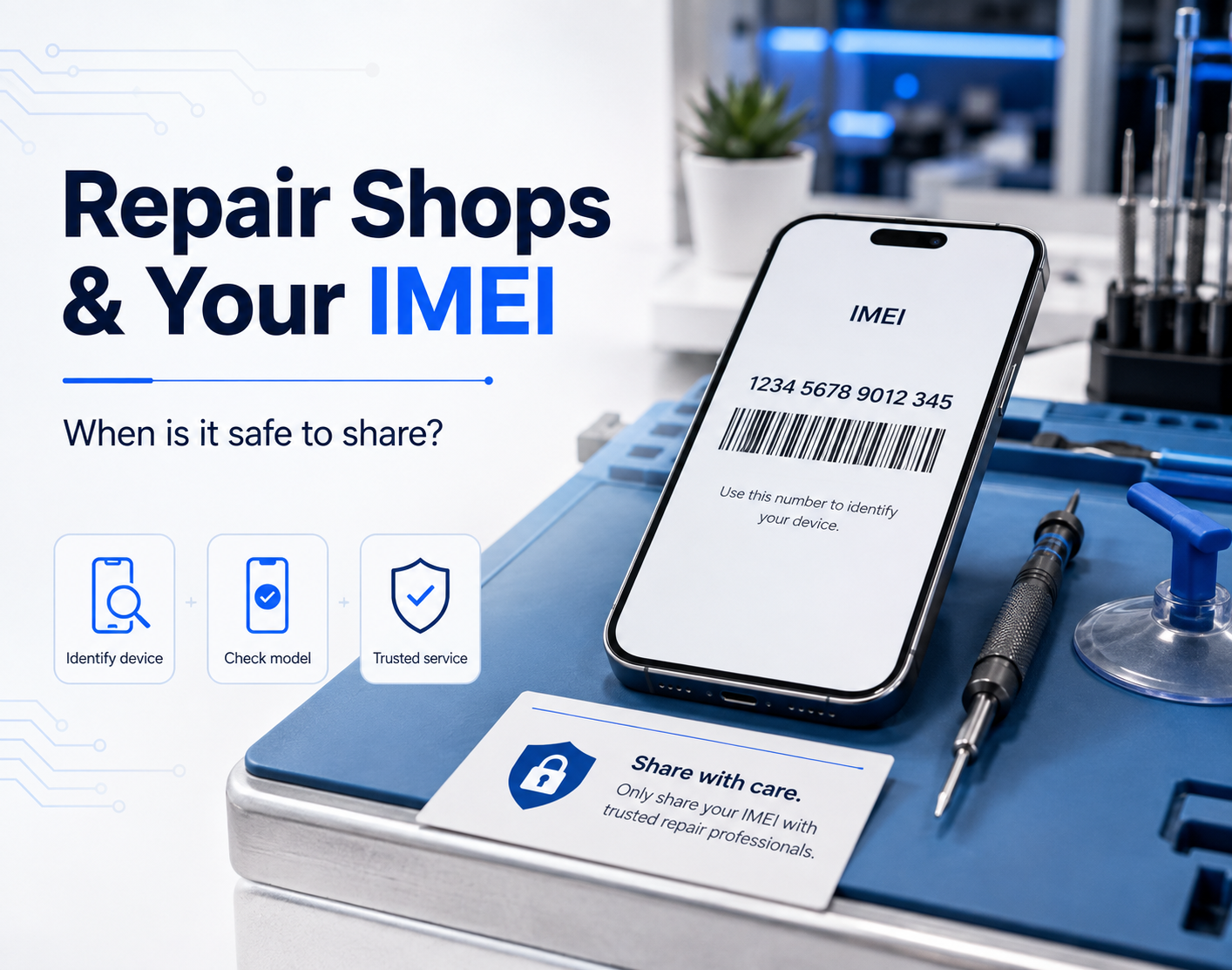
You contact a repair centre about a cracked screen or a phone that suddenly stopped charging. Before asking for photos or even giving you a price, the technician asks for one thing:
“Can you send us the IMEI?”
For many users, that immediately sounds suspicious. After all, the IMEI is a unique number assigned to the phone. Should you really give it to someone else?
In a legitimate repair process, there are several good reasons why a service centre may need it.
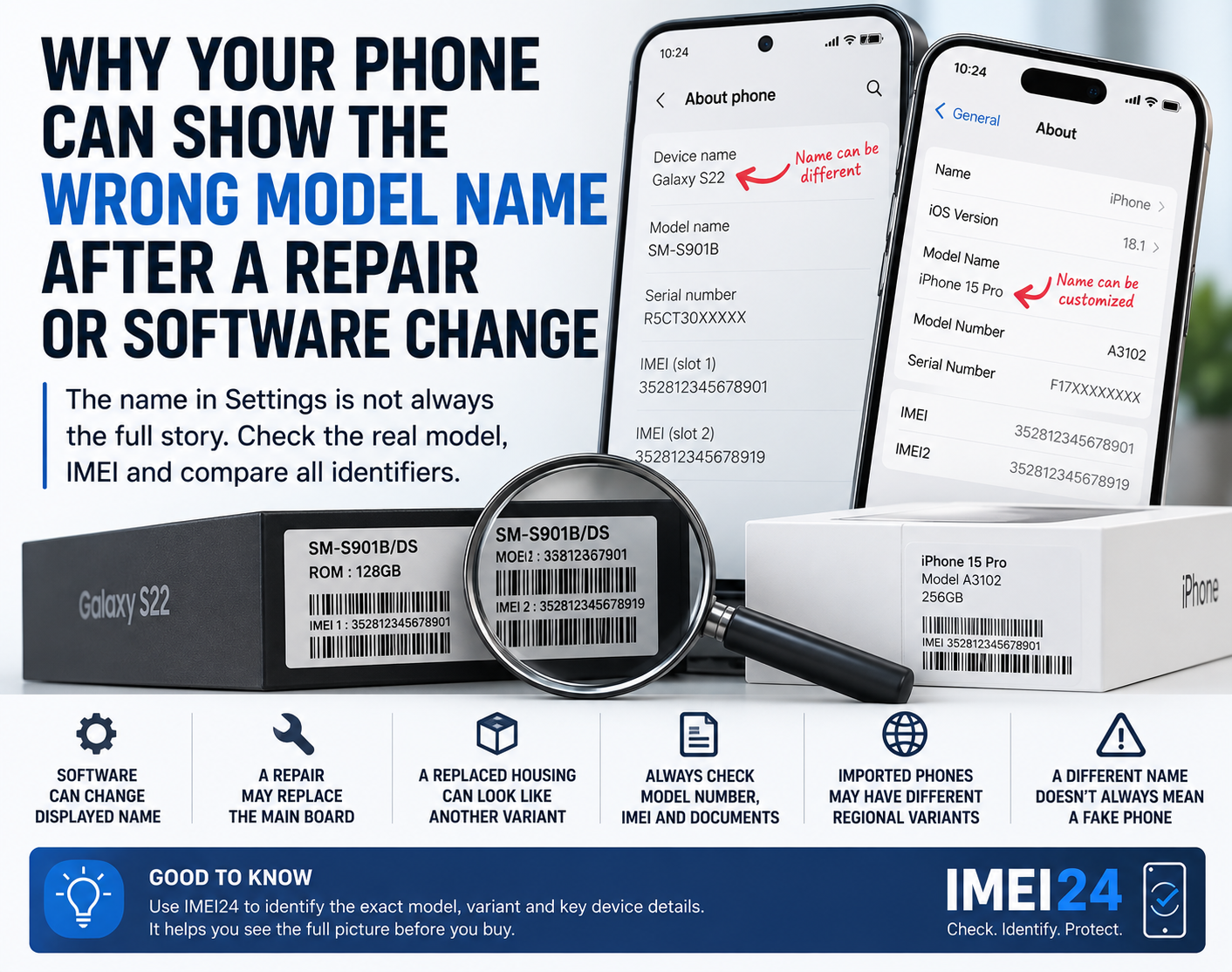
IMEI helps identify the exact device
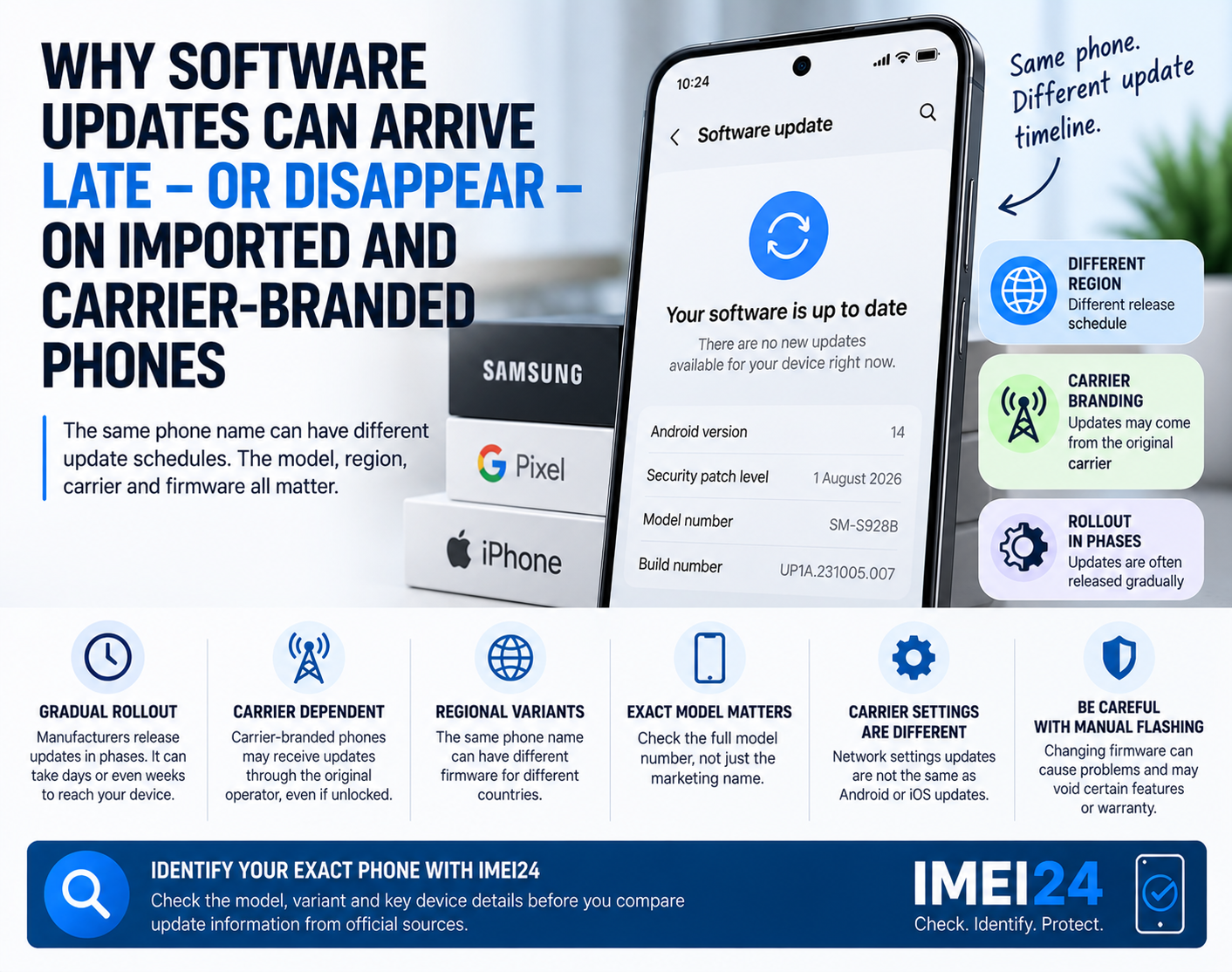
A phone's commercial name is not always enough.
“Samsung Galaxy S25” or “Google Pixel” may describe a family of devices, but repair centres often need to know exactly which variant they are dealing with.
Depending on the manufacturer and model, there can be differences in:
• regional versions
• network variants
• storage configurations
• internal components
• parts compatibility
The IMEI can help identify the device more precisely before the phone even reaches the workshop.
That matters because ordering a part for the wrong variant can turn a simple repair into a delay.
Manufacturers themselves use IMEI during repair procedures
Asking for an IMEI is not something limited to small independent repair shops.
Google's official Pixel repair process allows users to start a repair by selecting their device or entering its IMEI or serial number. Google also uses the IMEI when checking warranty status and preparing repair estimates.
Apple can also require a product serial number or IMEI when certain genuine parts are ordered through its Self Service Repair programme.
In other words, using a device identifier as part of the repair process is normal.
The important question is not simply whether someone asks for your IMEI, but who is asking and why.
Why a repair quote may depend on the exact model
Imagine two phones that look almost identical from the outside.
One was sold in Europe and another was originally intended for a different market. They may have different model numbers or component variants even though both are advertised under the same product name.
A repair centre trying to quote a replacement part needs more than a photo of the phone.
This is particularly relevant when:
• the phone was imported
• the original box is missing
• the owner does not know the exact model number
• several variants of the same model exist
• the device was bought second-hand
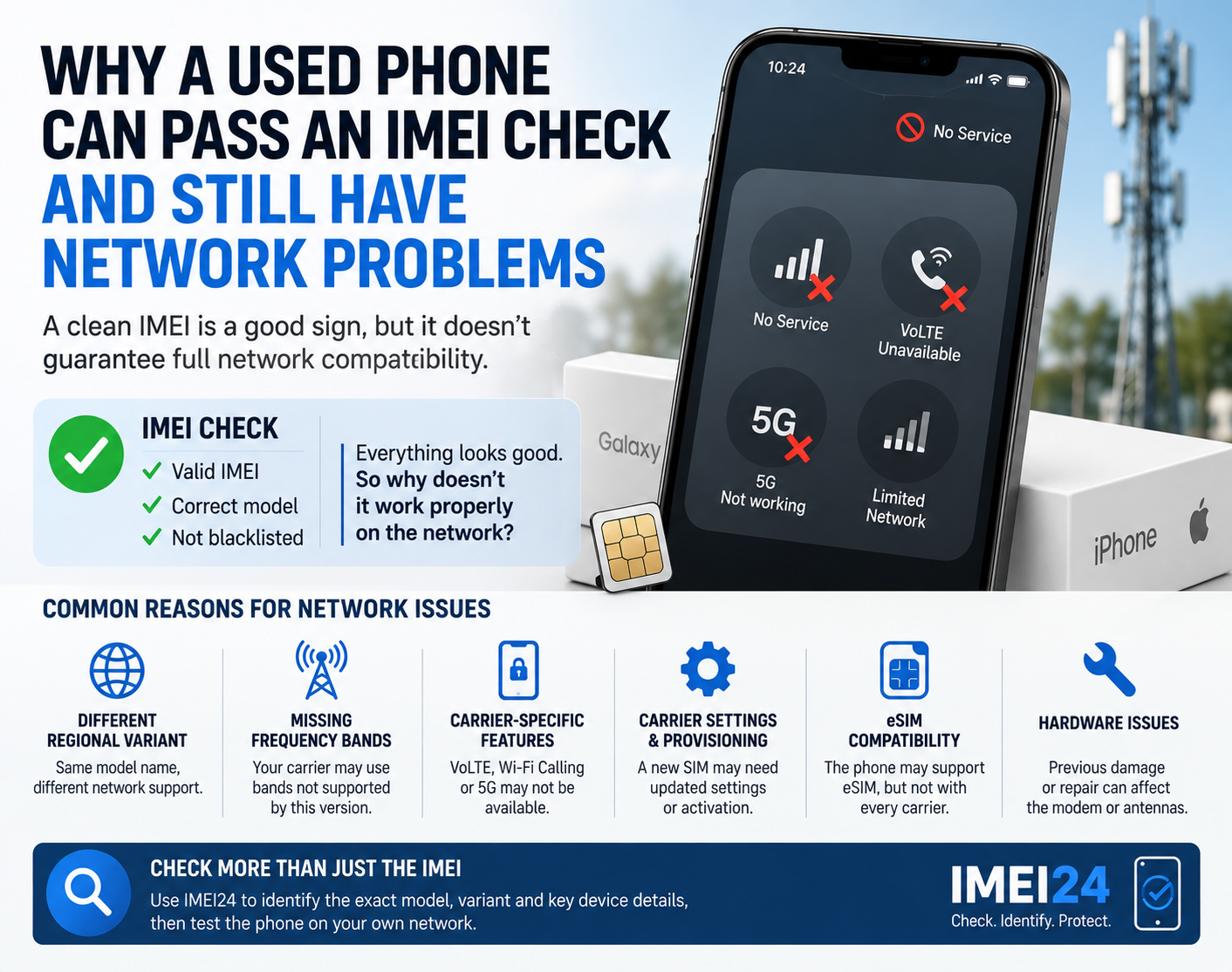
Before sending a phone away, you can also check the available device information yourself. A lookup through IMEI24 may help confirm details such as the manufacturer, exact model, Product Name, SKU, storage or device variant where those records are available.
This gives you a useful reference point when talking to the repair centre.
Is an IMEI a password?
No.
An IMEI is a device identifier, not an account password, PIN or screen unlock code.
Knowing an IMEI does not automatically give someone access to your photos, messages, Google account, Apple Account or banking applications.
That does not mean you should publish it everywhere.
There is rarely a good reason to post your complete IMEI publicly on a forum, social network or marketplace listing where anyone can copy it.
Treat it more like identifying information about the device than a secret authentication credential.
When sharing an IMEI makes sense
Providing the IMEI is reasonable when you are dealing with:
• the manufacturer
• an authorized repair centre
• a reputable independent repair company
• your mobile carrier
• a legitimate device-checking service
There should also be a clear reason for requesting it.
For example, identifying a device, checking service eligibility, confirming compatibility or preparing a repair order all make sense.
When you should be more careful
Context matters.
If a random buyer on social media asks for your full IMEI without explaining why, there is no need to send it immediately.
The same applies to unsolicited messages claiming that somebody “needs your IMEI to verify your phone.”
Before sharing it, ask yourself:
Who is requesting the number?
Why do they need it?
Am I communicating through the company's real website or official contact channel?
Does the request make sense for what I am trying to do?
A legitimate company should be able to explain why the identifier is required.
IMEI is not the same as giving someone access to the phone
This distinction is especially important before repair.
A technician may need the IMEI without needing your screen passcode.
For many repairs, users should also think about their personal data separately from device identification.
Before handing over a phone for service, consider:
• making a backup
• removing the physical SIM if appropriate
• transferring or securing your eSIM when required
• using a dedicated repair mode if the manufacturer provides one
• removing sensitive data if the phone must be factory-reset
For example, Google recommends backing up a Pixel before repair and provides Repair Mode on supported devices so technicians can perform diagnostics without normal access to the owner's personal data.
Check the number before the phone leaves your hands
There is one very simple habit that can save confusion later.
Record the IMEI before giving your phone to a repair centre.
You can usually display it by dialing:
*#06#
You can also find it in the phone settings, and it may be printed on the original packaging.
If the phone supports two cellular lines, you may see IMEI1 and IMEI2.
Keeping the number in your repair documentation makes it easier to identify exactly which device you handed over.
One number, several practical uses
The IMEI was never designed as a password. Its main job is identifying a mobile device on cellular networks.
But that identity also makes it useful outside everyday network operation.
Manufacturers use it. Carriers use it. Repair systems use it. And owners can use it to verify exactly which device they are dealing with.
So when a repair centre asks for your IMEI, the request itself is not a red flag.
The better question is whether the company is trustworthy and whether there is a sensible reason for them to need it.