Refurbished, Renewed or Used? These Smartphones Are Not the Same
Shopping for a smartphone online can get confusing surprisingly quickly.
One listing says used. Another says refurbished. A third describes what appears to be exactly the same phone as renewed.
They are all pre-owned devices, so what's the difference?
The answer matters because these words can describe very different histories - and very different levels of inspection, repair and preparation before a phone reaches its next owner.
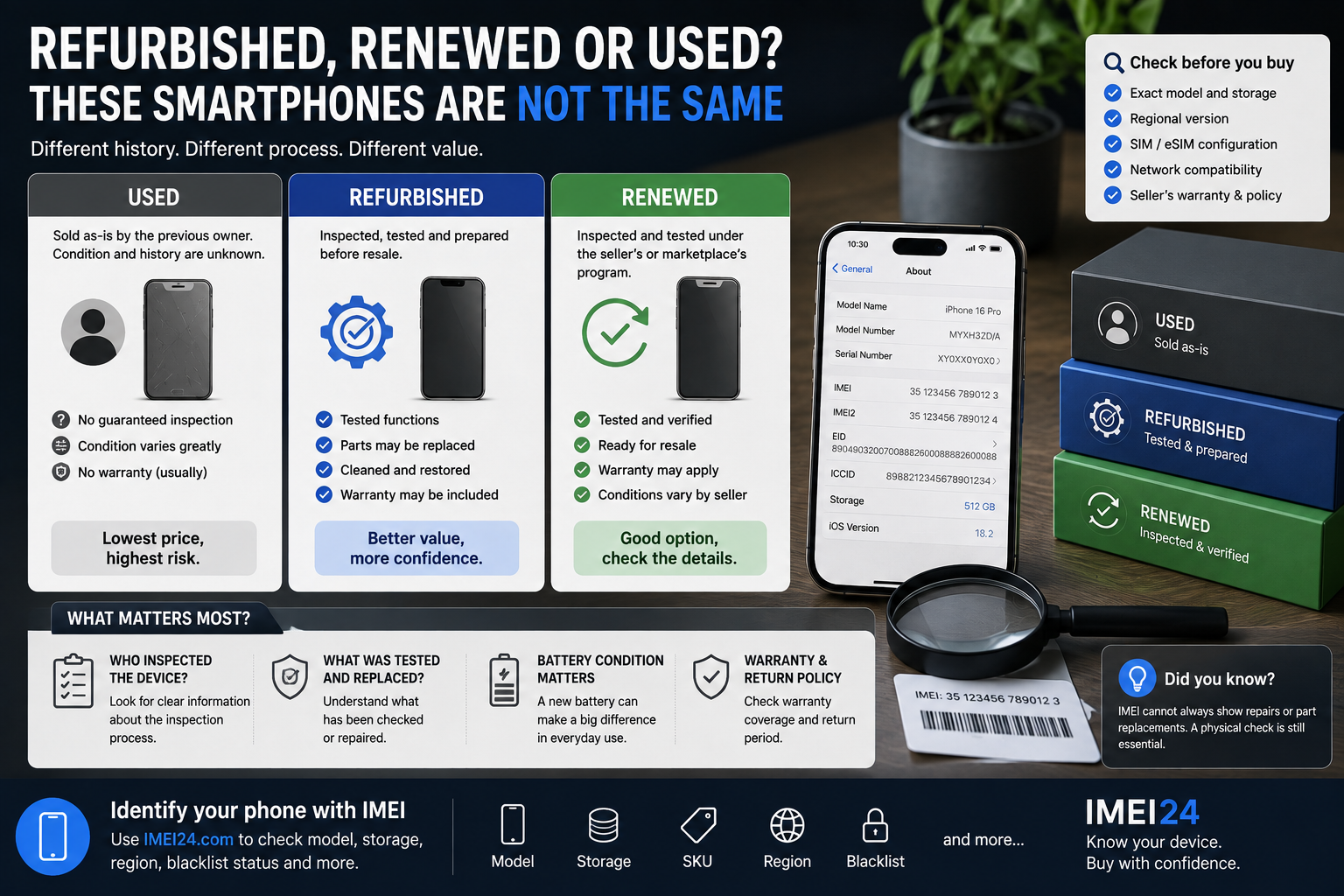
Used is the simplest category
A used smartphone is exactly what the name suggests: a device that previously belonged to someone else.
It may be in excellent condition or heavily worn.
The previous owner might have replaced the battery, repaired the screen or never opened the phone at all.
Unless the seller provides this information, you simply don't know.
Buying used can offer excellent value, especially when purchasing directly from a careful owner.
But the condition of one used phone tells you nothing about another.
What does refurbished actually mean?
A refurbished smartphone has usually gone through some form of inspection or preparation before being offered for sale again.
Depending on the seller or refurbisher, this may include:
• testing major functions
• cleaning the device
• replacing defective components
• installing or restoring software
• checking battery condition
• grading cosmetic condition
The important words here are "depending on the seller".
There is no single refurbishment process used by every company selling smartphones worldwide.
One seller may perform extensive testing and replace worn components. Another may use the term much more broadly.
And what about "renewed"?
Renewed is another term commonly found in online marketplaces.
In practice, it is often used as a commercial description for previously owned products that have been inspected, tested or prepared for resale under a particular seller's or marketplace's program.
It should not automatically be interpreted as meaning "factory refurbished".
When you see the word renewed, check what the seller actually promises rather than relying on the label alone.
Refurbished does not necessarily mean repaired
This is an important distinction.
A phone can enter a refurbishment process without having suffered a major failure.
Some devices are returned shortly after purchase. Others come from trade-in programs, business fleets or customer upgrades.
A refurbisher may inspect and clean a perfectly functional device without replacing major components.
Another phone may require a new display, battery or housing before it can be sold again.
Both could eventually appear online as "refurbished".
Who performed the refurbishment?
This is often more important than the word printed in the listing.
There is a significant difference between a device refurbished through a manufacturer's official program and one prepared by an unknown third-party seller.
Before purchasing, look for information about:
• who inspected the device
• what was tested
• whether components were replaced
• battery requirements
• warranty coverage
• return policy
A detailed refurbishment policy tells you much more than the word "refurbished" itself.
Check whether the specifications match the listing
Cosmetic condition is only part of the buying process.
You should also make sure the device itself matches what is being advertised.
Check the exact:
• model
• storage capacity
• regional version
• SIM configuration
• network compatibility
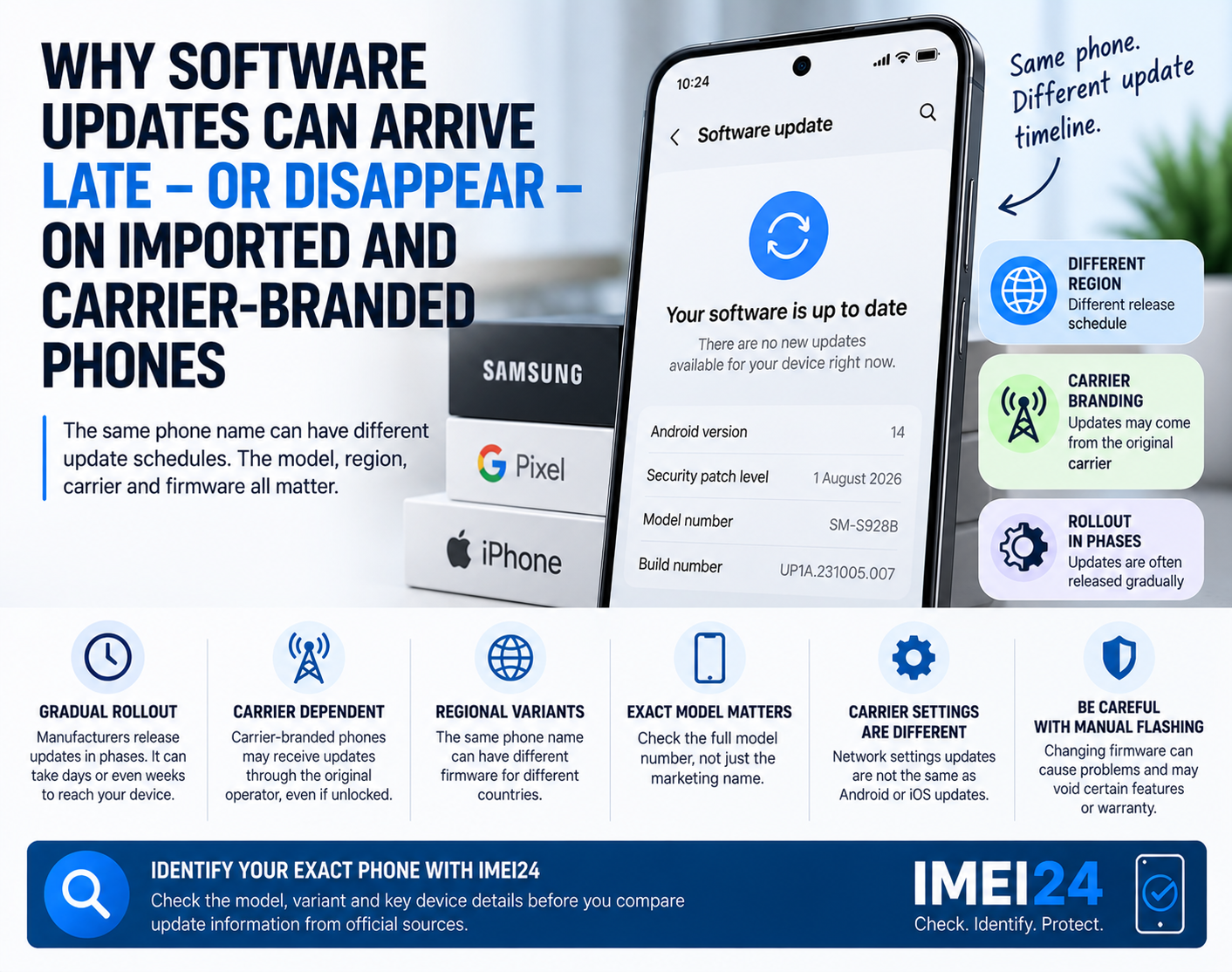
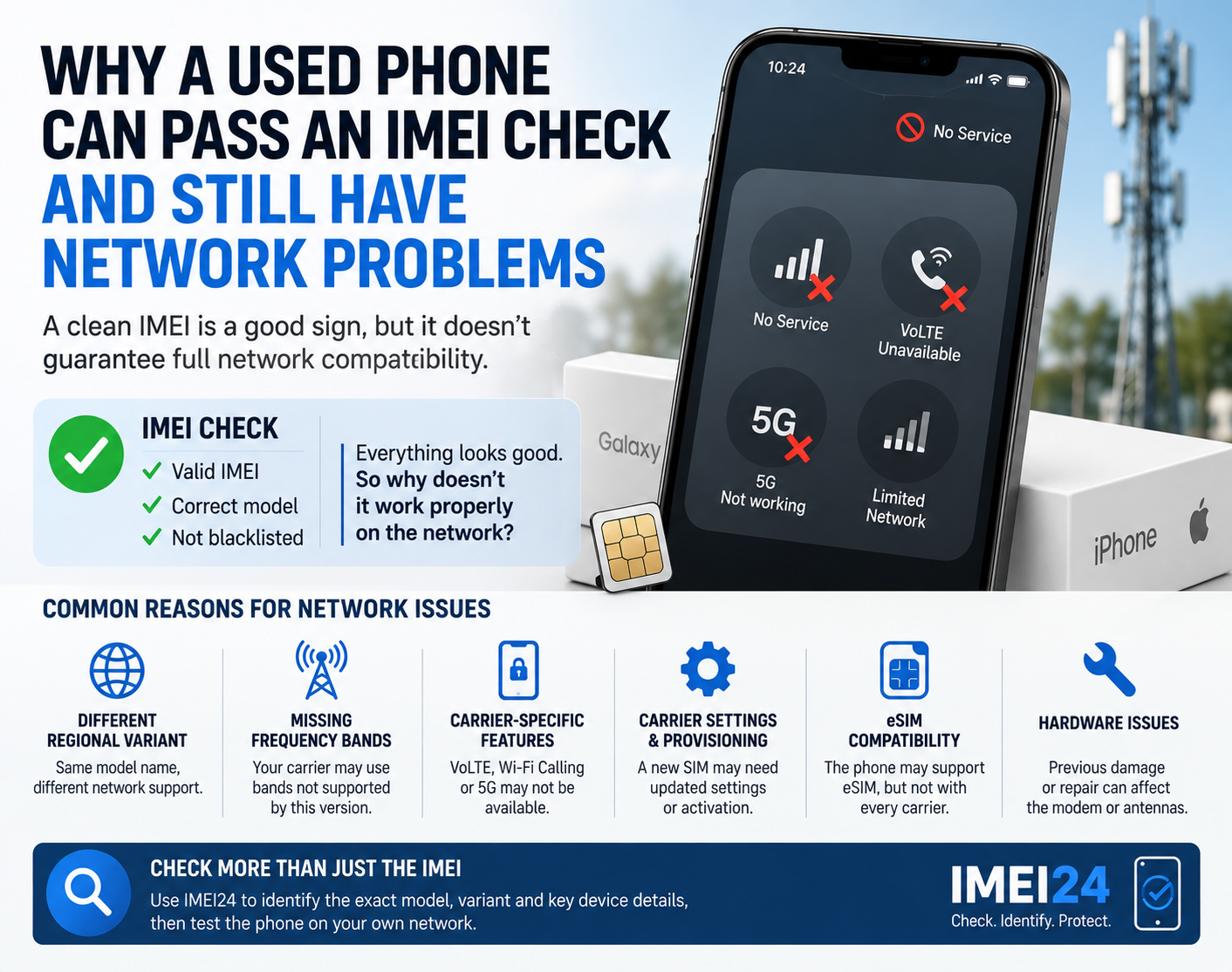
This becomes particularly important with refurbished phones because devices can move between countries and sellers before reaching their next owner.
IMEI can provide another piece of the puzzle
The IMEI is an identifier associated with the phone's cellular equipment.
Depending on the device and available data, an IMEI lookup may provide information that helps identify the smartphone more precisely.
Using IMEI24, available results may include:
• manufacturer
• exact model
• product name
• storage version
• device SKU
• IMEI1 and IMEI2
• blacklist status
• other available device information
This does not tell you whether a seller performed a good refurbishment or whether every component inside the phone is original.
It does, however, give you another way to compare the device with the information provided in the listing.
Can IMEI tell you whether a phone is refurbished?
Not necessarily.
This is a common misconception.
The IMEI identifies the mobile device, but an ordinary IMEI lookup should not automatically be treated as a complete repair history.
A phone may have had a battery or screen replaced without that information being available through an IMEI check.
That is why device verification and physical inspection serve different purposes.
What should you check when the phone arrives?
Even if the seller has a good reputation, spend a few minutes checking the device during the return period.
Look at:
• display condition and touch response
• cameras
• speakers and microphones
• charging
• physical buttons
• Wi-Fi and cellular connectivity
• battery condition where available
• SIM or eSIM operation
Also compare the model and storage information displayed by the phone with what you actually ordered.
A cheap refurbished phone is not automatically a bargain
Price matters, but context matters more.
If one refurbished smartphone is dramatically cheaper than every comparable offer, find out why.
It may simply be a good deal.
But it may also have a lower cosmetic grade, shorter warranty, heavily used battery or different regional specification.
The cheapest listing and the best-value listing are not always the same thing.
Final thoughts
"Used", "refurbished" and "renewed" all tell you that a smartphone has had a life before reaching you.
They do not tell you the whole story.
Instead of focusing only on the label, check who is selling the device, what inspection has been performed, what warranty you receive and whether the actual smartphone matches the advertised specification.
And if you want to identify the device more precisely, checking the available information associated with its IMEI on IMEI24 can be one useful part of that process.
With refurbished phones, the best question isn't simply "Is it refurbished?"
It's "What exactly was done before it was offered for sale again?"