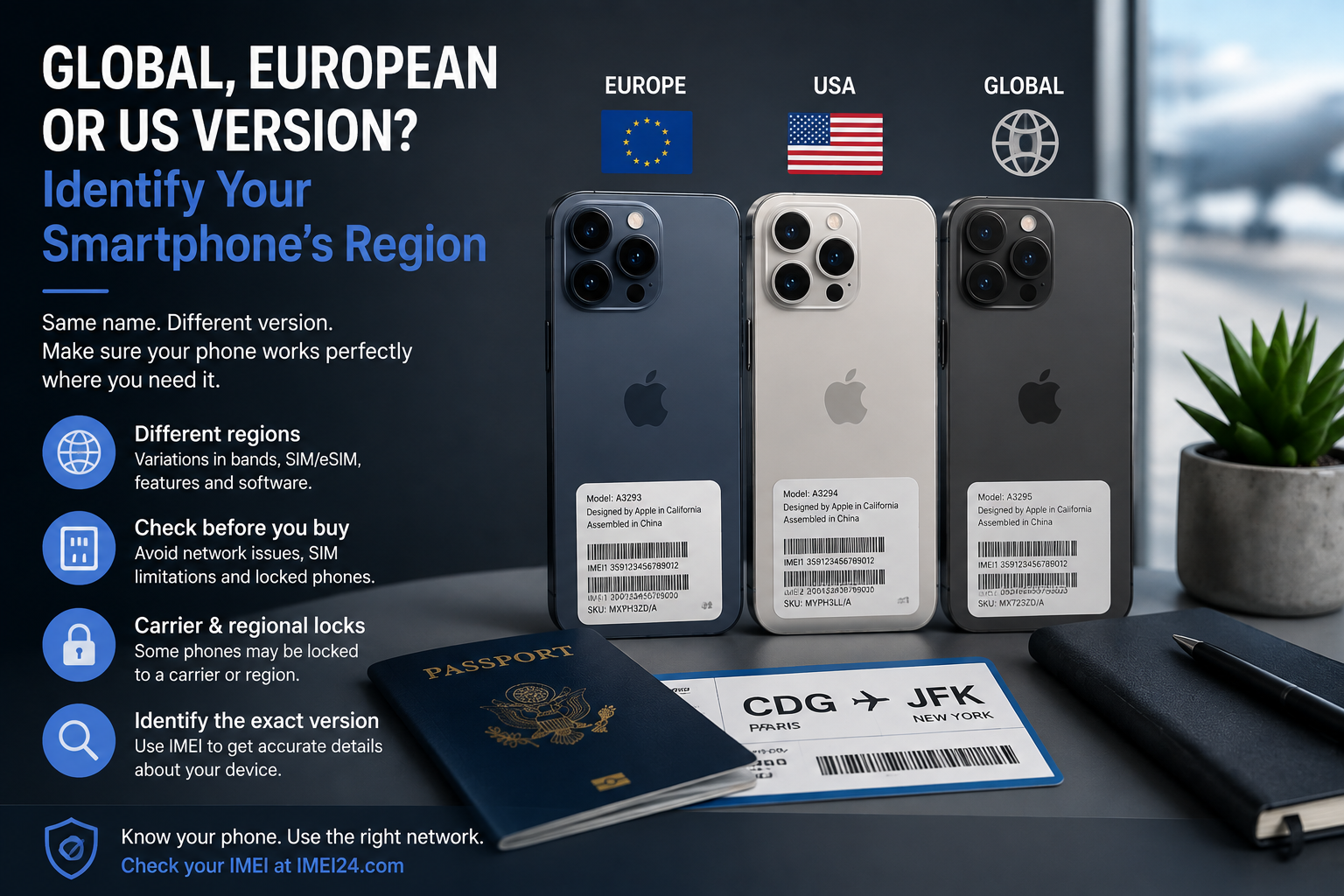
Global, European or US Version? How to Identify Your Smartphone's Region
A phone is a phone, right?
Not necessarily.
Two smartphones can have exactly the same name, look identical on the outside, and still be different devices underneath. One may have been designed for Europe, another for the United States, and another for an Asian market.
For most people this difference remains invisible - until they travel, change carriers, activate an eSIM, or buy an imported phone.
Why do manufacturers make different regional versions?
Smartphones are sold in hundreds of countries, but mobile networks are not identical everywhere.
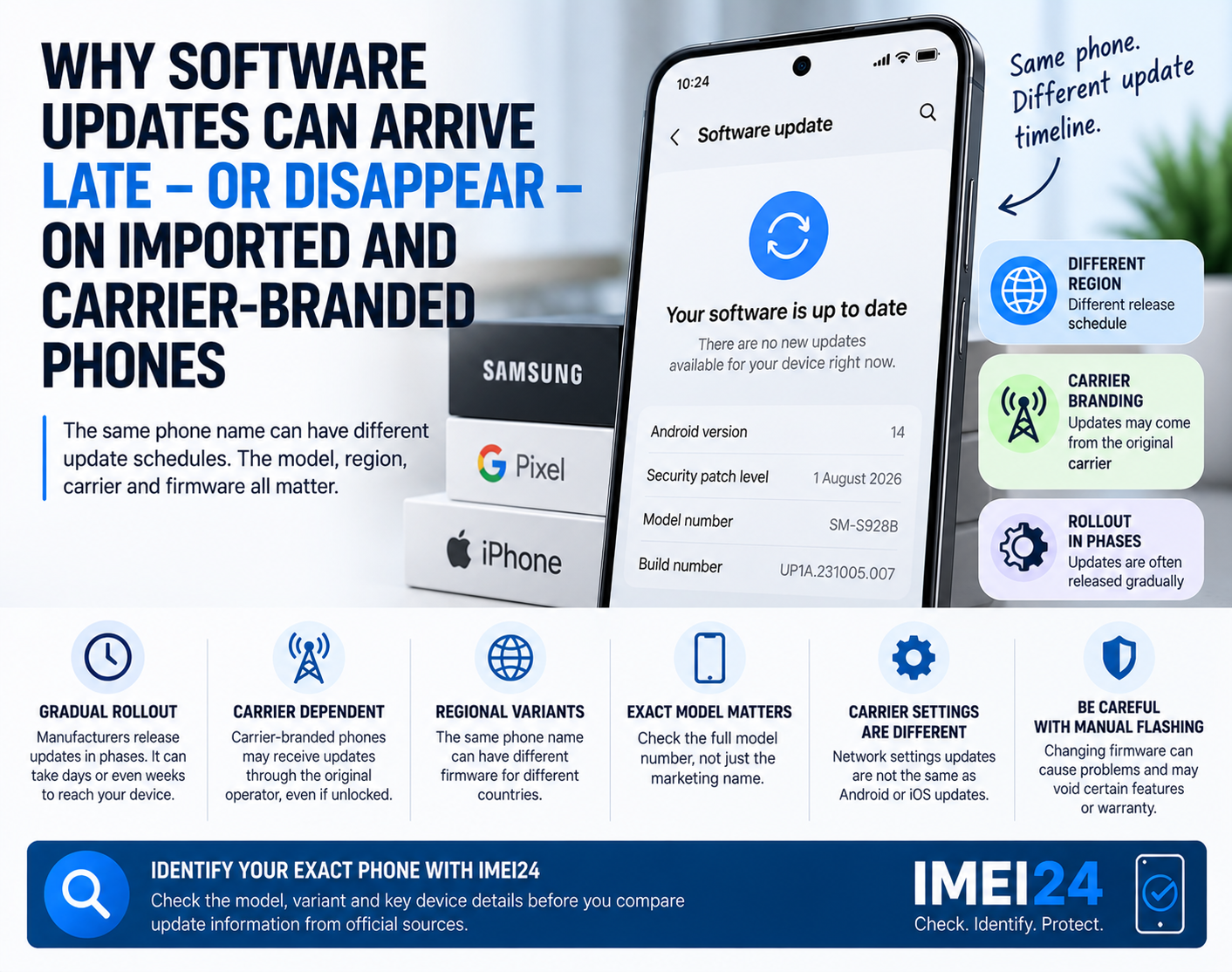
Manufacturers therefore produce different variants to accommodate local requirements, carriers, network technologies, and regulations.
Depending on the model and market, differences can involve:
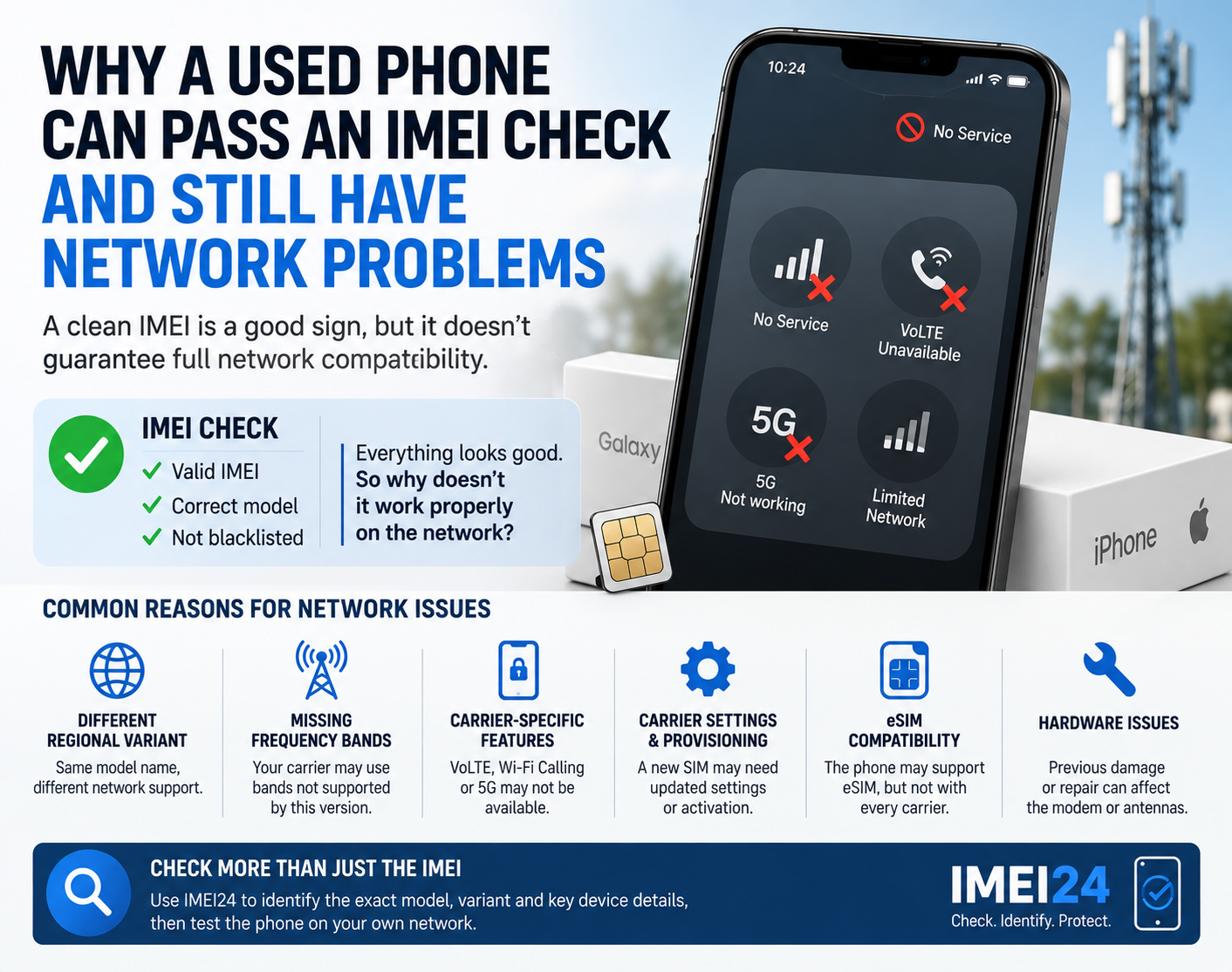
• supported LTE and 5G frequencies
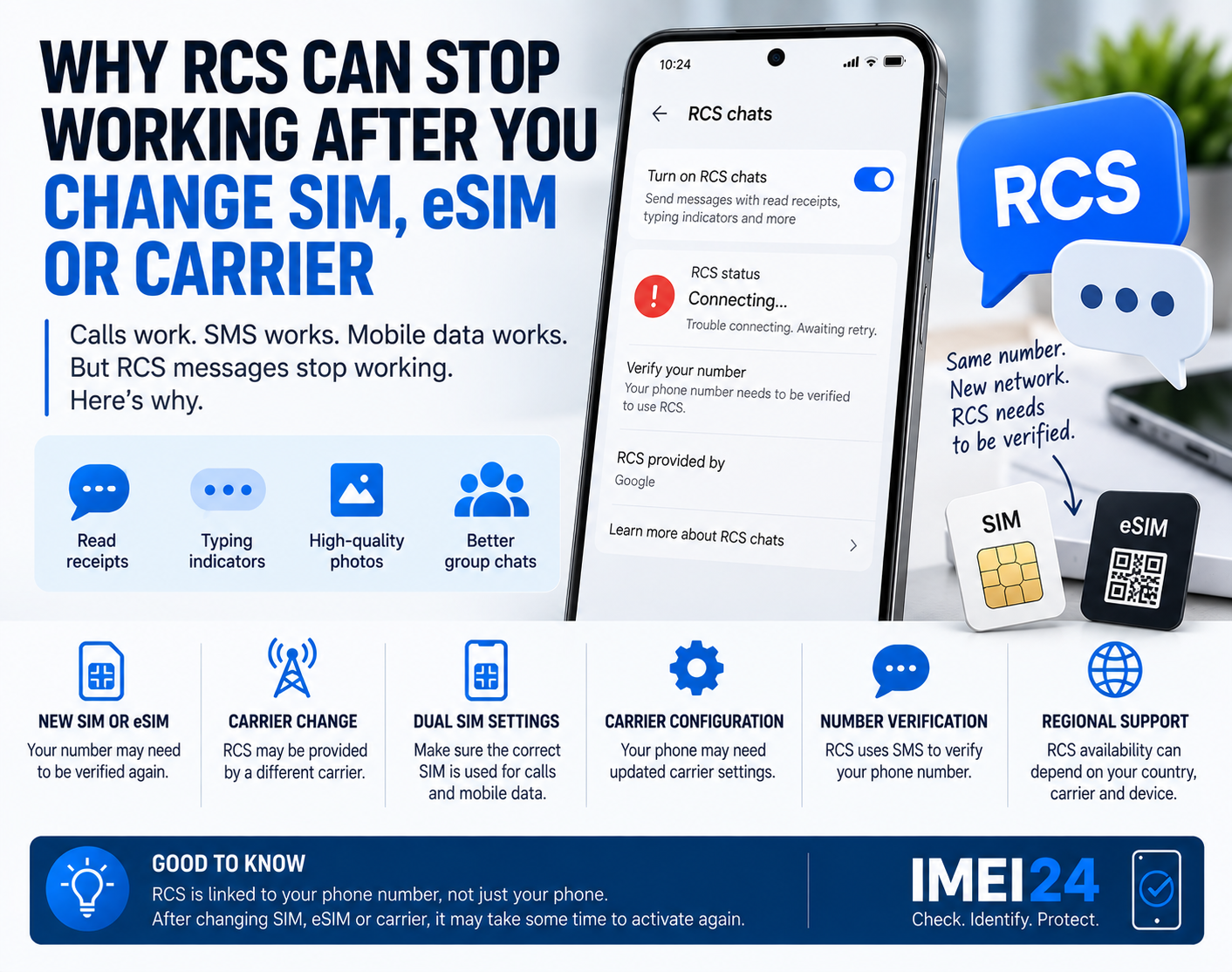
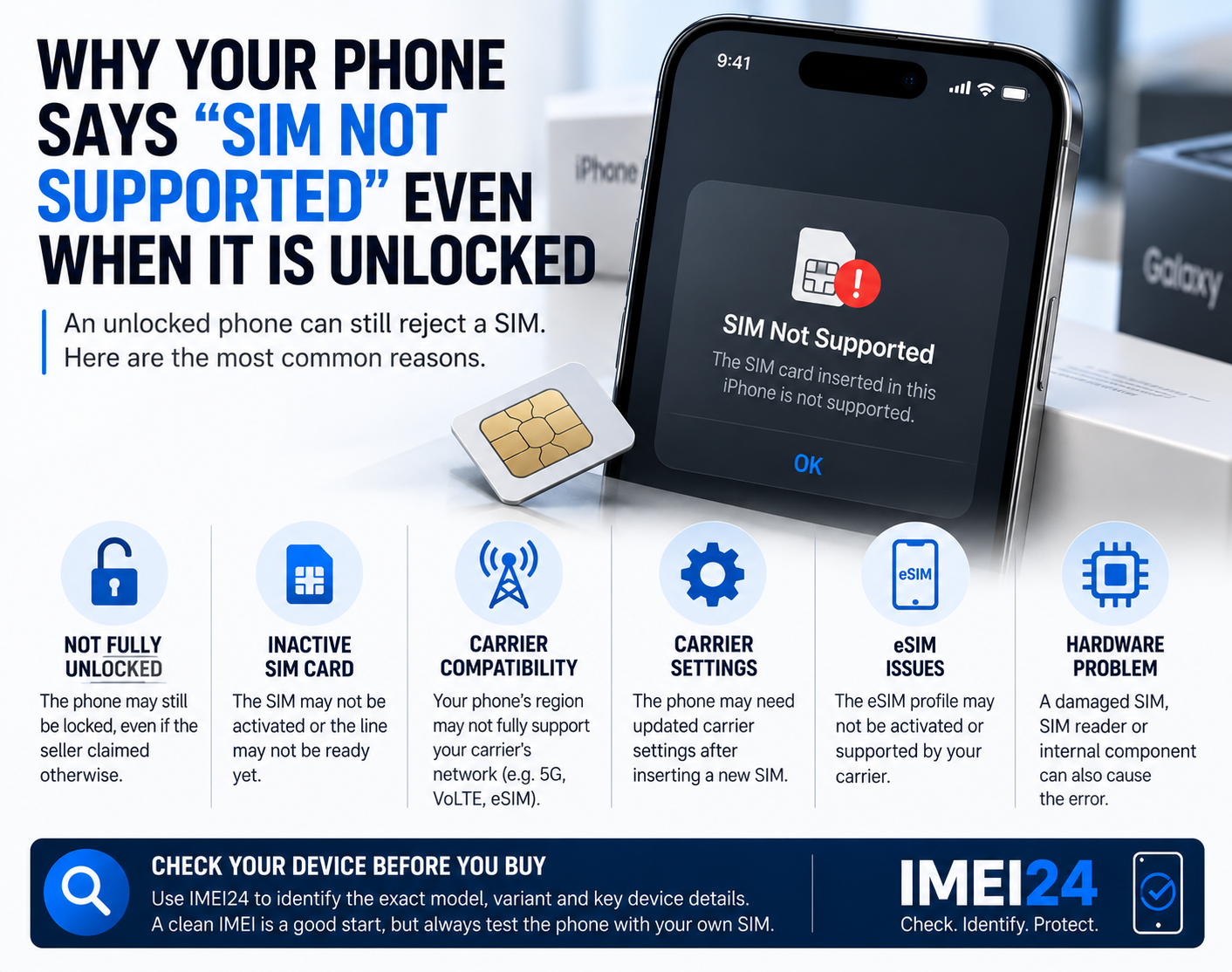
• physical SIM and eSIM configuration
• model numbers
• carrier compatibility
• regional software or features
That is why knowing only the commercial name of a phone is not always enough.
iPhone is a good example
An iPhone sold in Europe and an iPhone with the same commercial name originally sold in another market may not necessarily be the same variant.
One of the most visible examples is SIM configuration. Depending on the generation and country of sale, an iPhone may use a physical nano-SIM, eSIM, or a different combination of both.
Network support can also vary between regional versions.
This becomes particularly important with imported or second-hand devices, where the new owner may not even know where the phone was originally sold.
How can you find the original iPhone network?
Sometimes identifying the exact model is only the beginning. If an iPhone is carrier locked, knowing which network originally sold the device can be important before choosing an unlocking service.
If you don't know the original carrier, you can use:
Apple iPhone Network Finder
This can be particularly useful with second-hand or imported iPhones where the original network information has been lost over time.
Region and carrier lock are not the same thing
This distinction is important.
A regional version describes a device intended for a particular market. A carrier lock, commonly known as SIM lock, restricts a phone to a particular mobile network.
An imported iPhone can therefore be perfectly compatible with networks in another country but still remain locked to the carrier that originally sold it.
If the device is supported, available iPhone unlocking services for selected networks and regions, including EMEA, can be checked here:
iPhone Network Unlock
Samsung adds another type of regional restriction
Samsung provides an interesting example of why the word "region" can mean several different things in the smartphone world.
In addition to different regional hardware variants and traditional carrier locks, some Samsung devices may encounter a regional restriction associated with an RGCK code.
RGCK stands for Regional Control Key and should not be confused with the standard NCK network unlock code.
For supported Samsung devices requiring this type of code, more information is available here:
Samsung Regional Blockade Code RGCK
This is a good example of why identifying the type of restriction matters before trying to solve it. A network lock and a regional restriction are not automatically the same problem.
How do you identify which phone version you have?
Start with the exact model number rather than the marketing name.
Information associated with the IMEI can also help identify the device more precisely. Depending on the manufacturer and available data, an IMEI lookup may reveal information such as:
• exact model
• product name
• device SKU
• storage configuration
• IMEI1 and IMEI2
• other device-specific information
These details can help distinguish between devices that appear identical at first glance.
Why this matters when buying a used phone
Imagine finding an attractive deal on an imported smartphone. The model is correct, the storage capacity matches the listing, and the device is in excellent condition.
Only after buying it do you discover that its SIM configuration is different from what you expected, some network features depend on the regional variant, or the phone is still associated with its original carrier.
None of these problems would necessarily be visible in the seller's photos.
That is why the country of origin, exact model variant, and network status can matter just as much as battery condition or cosmetic appearance.
What should you check before importing a smartphone?
Before buying a phone originally intended for another market, check:
• exact model number
• region or country of origin
• supported mobile frequencies
• physical SIM and eSIM configuration
• carrier lock status
• compatibility with your mobile operator
With an iPhone, identifying the original carrier may also be useful if the device turns out to be network locked.
Same name does not always mean the same phone
Smartphone names have become simple, but the devices behind those names have become increasingly complex.
An iPhone, Galaxy, Pixel, or Xiaomi sold in Europe may not be configured exactly like the version offered in the United States or Asia.
Most users will never notice the difference. But when buying abroad, importing a used device, changing carriers, or activating a new SIM or eSIM, those small regional differences can suddenly become very important.
Final thoughts
Before buying an imported smartphone, don't stop at the name printed on the box.
Find the exact model, determine its region, check its network compatibility, and - when necessary - identify the original carrier or type of restriction.
A few minutes spent identifying the device correctly can prevent a situation where an otherwise excellent smartphone turns out to be the wrong version for the way you intended to use it.