Why a 5G Phone May Not Get 5G After You Import It
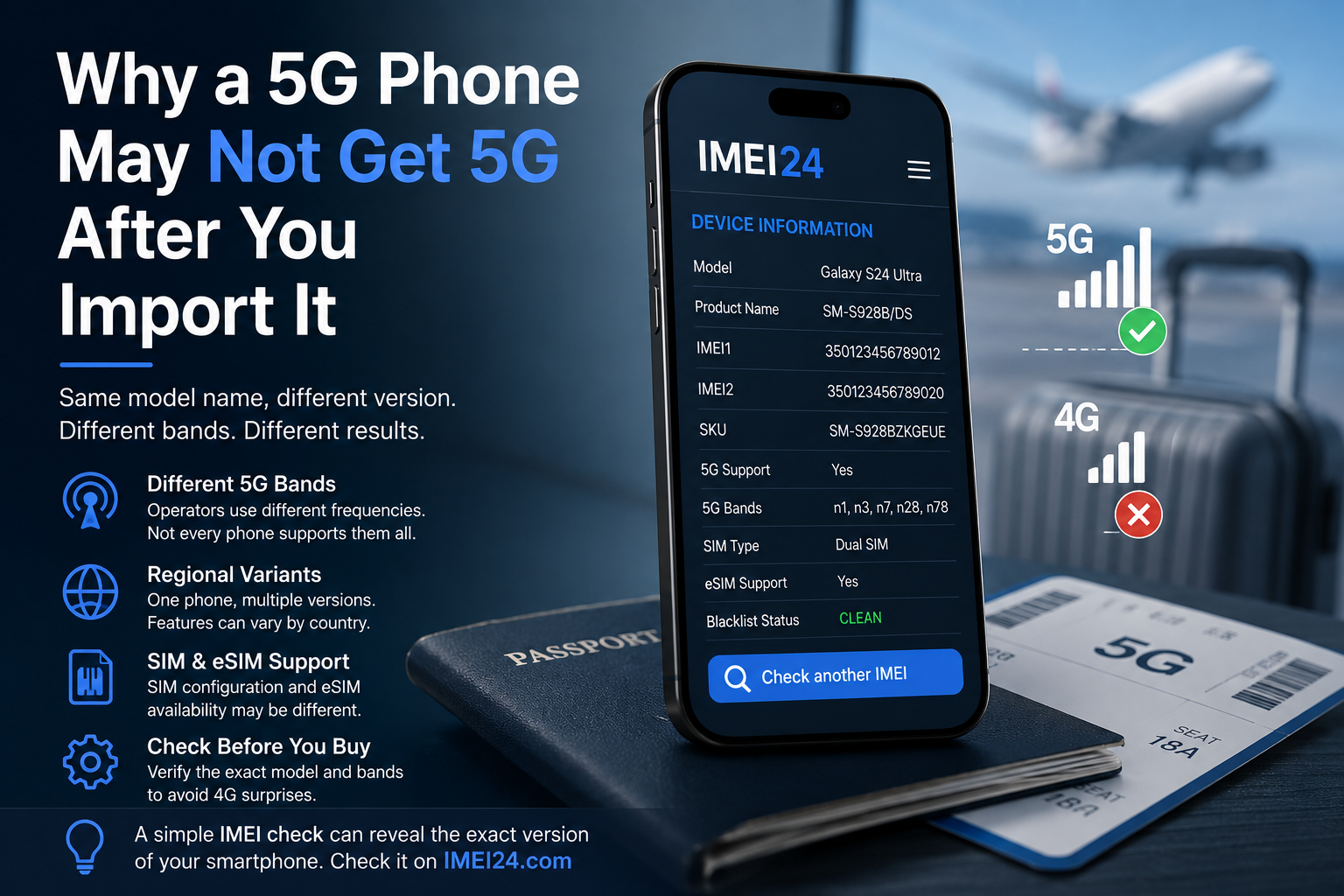
You buy a smartphone advertised as 5G, insert your SIM card, and everything seems normal. Calls work, mobile data works, and the phone connects to the network without any problems.
There is only one thing missing: 5G.
This situation is more common than many users expect, especially with smartphones imported from the United States, China, Japan, or other markets. The reason is simple: having a 5G modem does not automatically mean that a phone supports every 5G network in every country.
5G is not one universal frequency
Mobile operators use different frequency bands to provide 5G coverage. These bands vary between countries and even between operators within the same country.
A smartphone designed for one market may support a different combination of frequencies than the version sold elsewhere.
This means two phones with the same commercial name can behave differently on the same network.
The model name does not tell the whole story
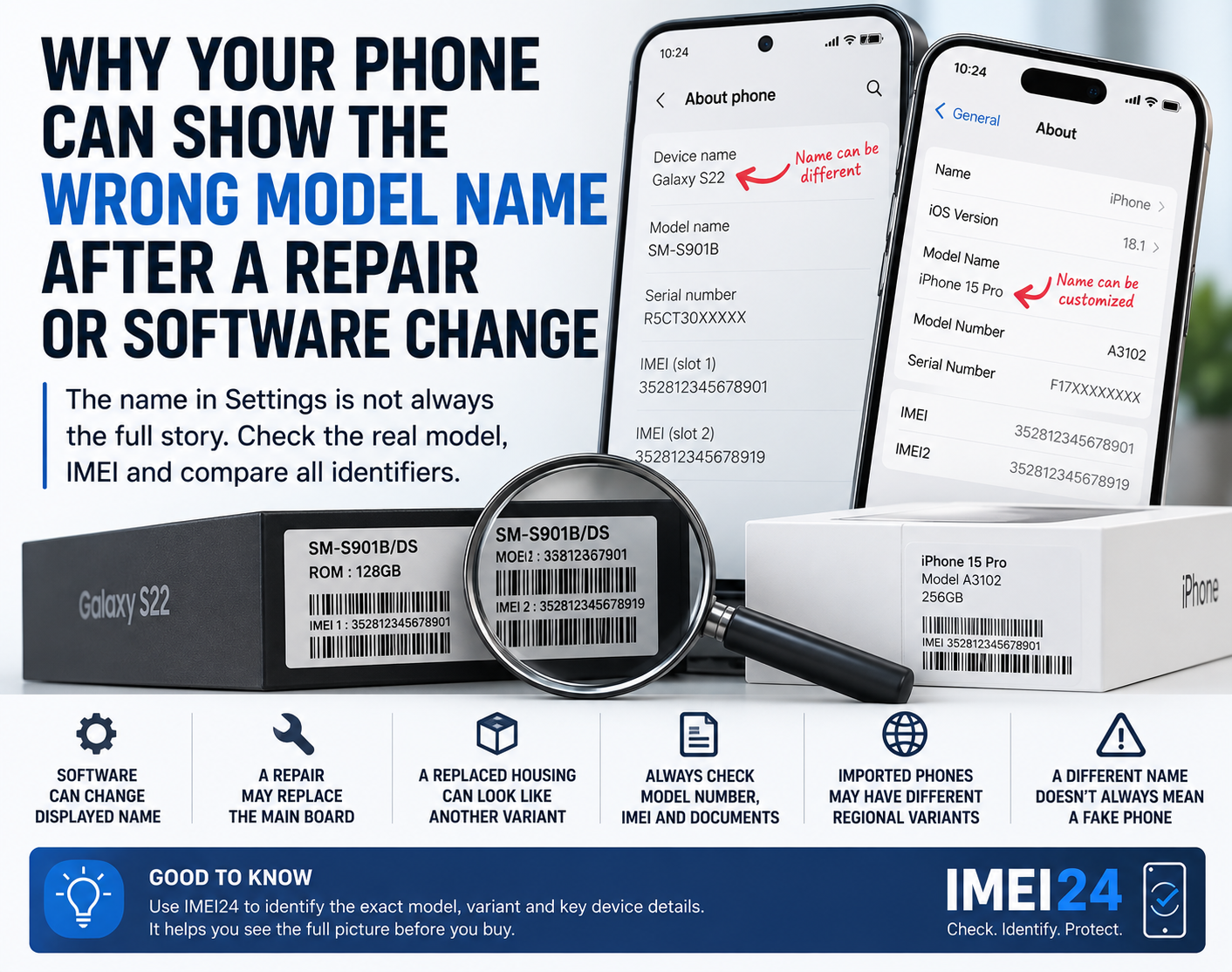
Seeing "Samsung Galaxy", "iPhone", "Pixel", or "Xiaomi" in the settings is not always enough to determine network compatibility.
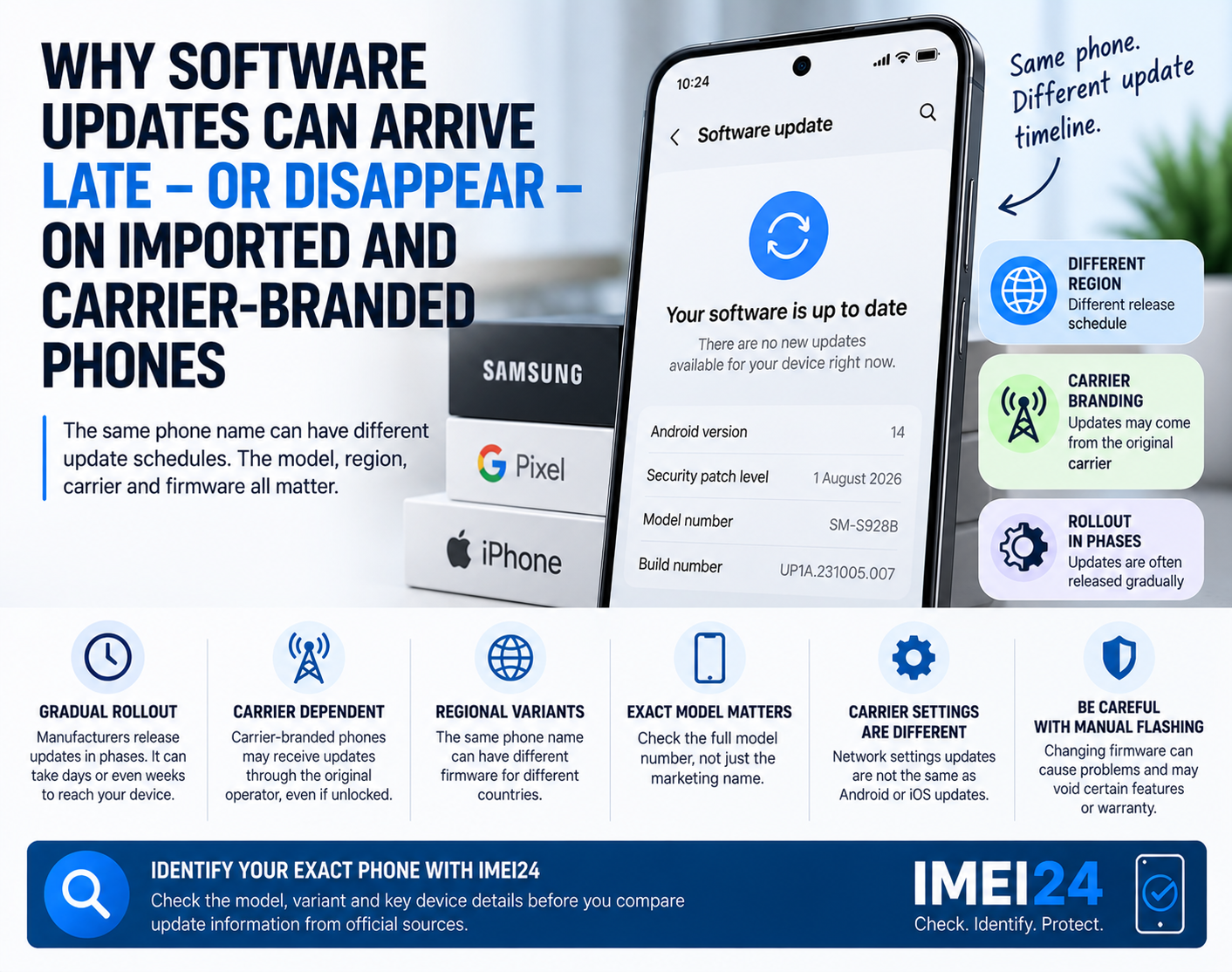
Manufacturers often produce several regional variants of the same smartphone.
Differences may include:
• supported LTE and 5G bands
• physical SIM configuration
• eSIM support
• regional software
• carrier-specific features
From the outside, the devices may look almost identical.
Why imported phones sometimes fall back to 4G
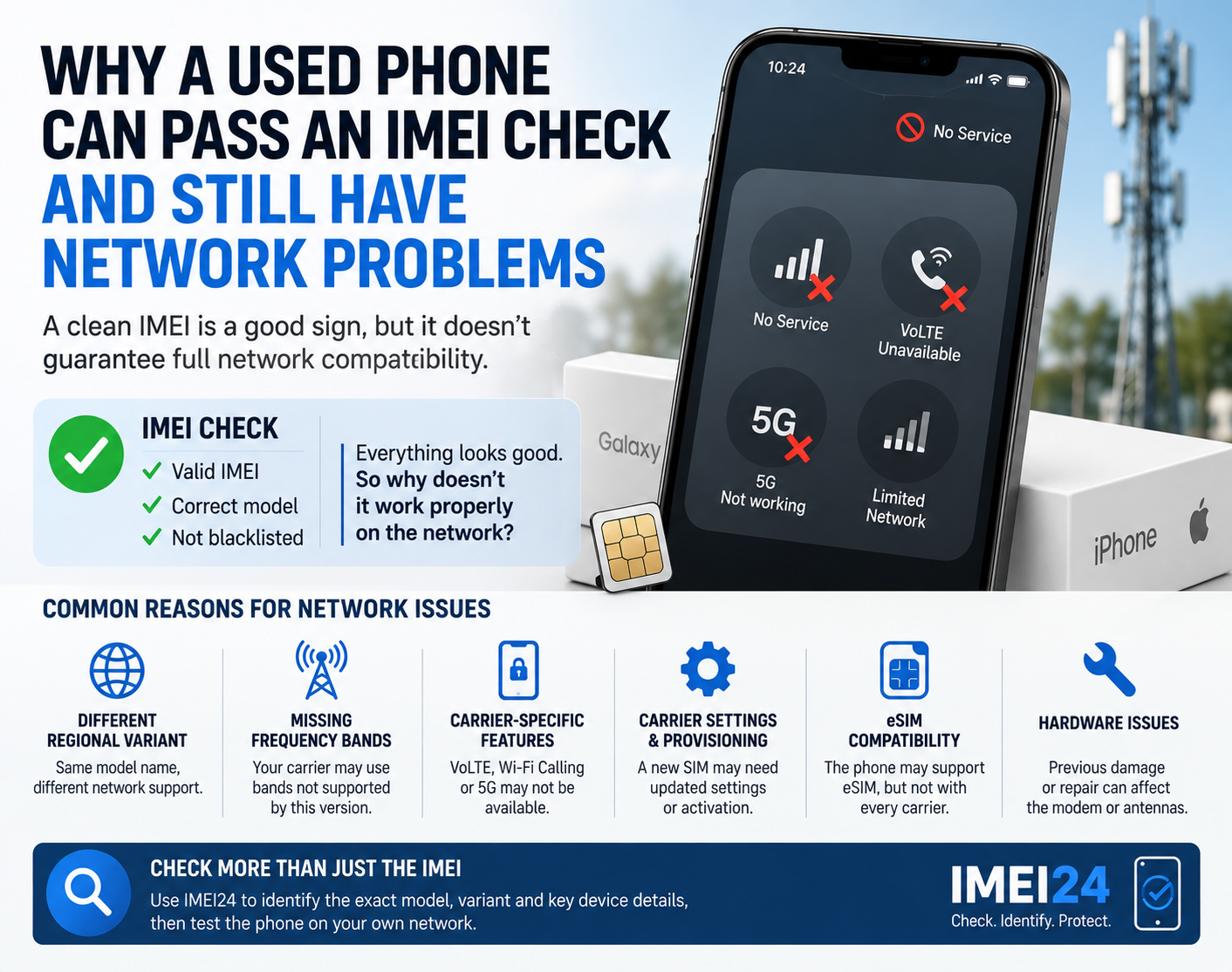
If the smartphone does not support the 5G frequency used by your local operator, it will usually connect to another available network instead.
In practice, this often means LTE or 4G.
The phone is not necessarily damaged, and the SIM card may be working correctly. The hardware simply may not support the required local frequency combination.
Carrier configuration can matter too
Frequency support is only part of the story.
Some operators use specific network configurations, carrier profiles, or combinations of LTE and 5G bands. A phone may technically support a particular frequency but still behave differently if the exact regional variant was never intended for that network.
This is one reason why imported smartphones sometimes provide excellent basic connectivity but lack certain advanced network features.
5G SA and NSA can also make a difference
Modern 5G networks can operate using different architectures.
NSA, or Non-Standalone 5G, uses existing LTE infrastructure together with 5G.
SA, or Standalone 5G, uses a dedicated 5G core network.
Depending on the smartphone model, software version, region, and carrier, support for these technologies can vary.
This makes checking the exact device variant increasingly important.
eSIM does not automatically solve compatibility problems
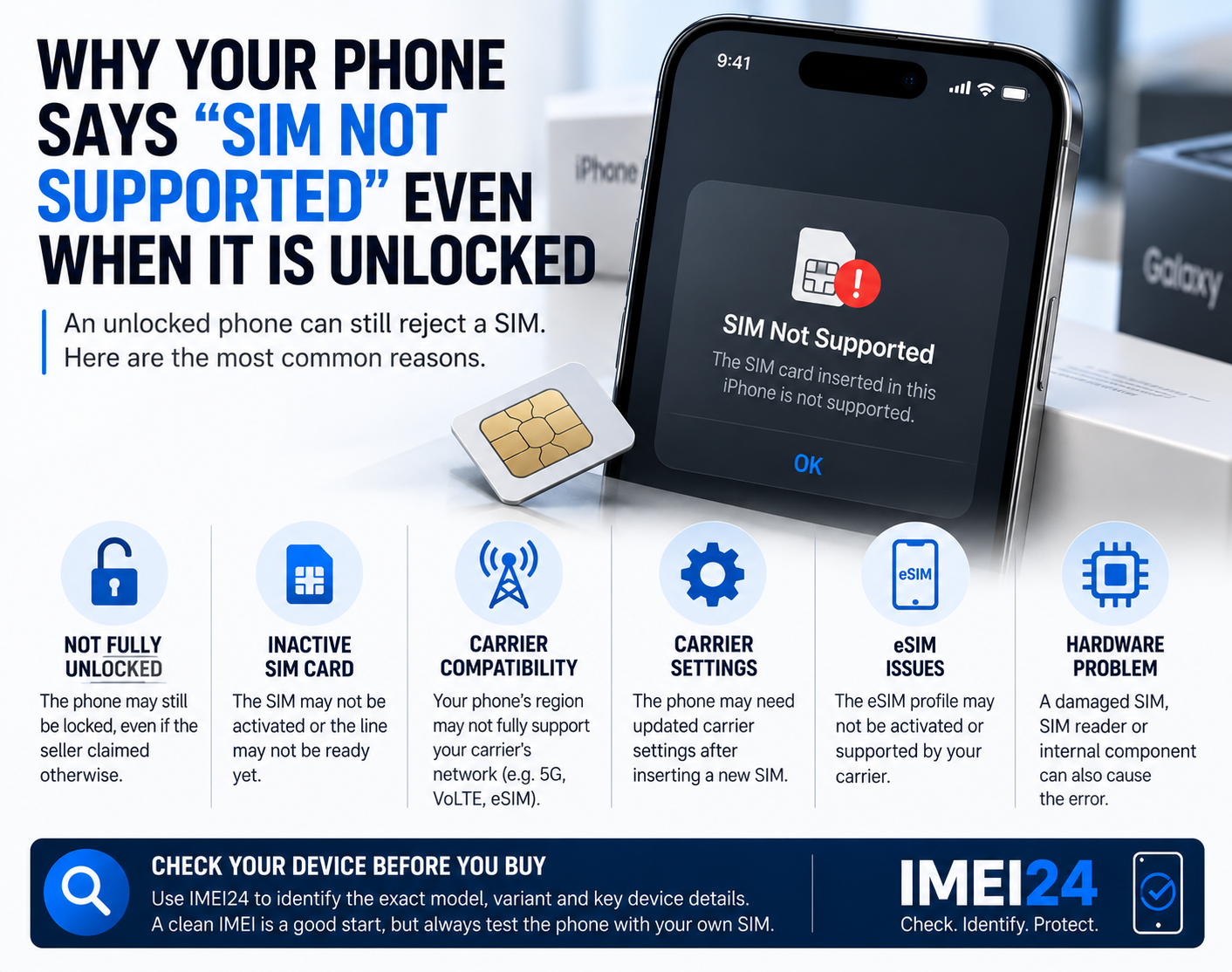
An eSIM makes it easier to activate a mobile plan without inserting a physical card, but it does not change the radio hardware inside the phone.
If a device does not support the required network bands, switching from a physical SIM to eSIM will not suddenly add them.
The same applies in reverse: a phone can support the correct frequencies but still have different SIM or eSIM capabilities depending on its regional version.
How to identify the exact version of your smartphone
Before importing a device or troubleshooting missing 5G, it is worth identifying exactly which version of the smartphone you have.
The commercial model name is only the beginning.
Using IMEI24, you can check device information linked to the IMEI number, which may include:
• exact model
• product name
• device SKU
• storage version
• IMEI1 and IMEI2
• other available device details
This information can help distinguish one regional variant from another.
How to find your IMEI
The fastest method is to dial:
*#06#
The smartphone should display its IMEI number immediately. Dual SIM and eSIM devices may show both IMEI1 and IMEI2.
You can then use this information to identify the device more precisely.
Check before importing, not after
An imported smartphone can be an excellent deal, especially when a particular model is cheaper or available earlier in another country.
But before buying, it is worth checking more than processor speed, storage, camera specifications, and battery capacity.
Network compatibility can be just as important.
A cheaper imported phone is less attractive if it cannot fully use the network where you live.
Final thoughts
A 5G logo on the box does not guarantee identical 5G performance everywhere in the world.
Regional smartphone variants can differ in supported frequencies, SIM configuration, software, and network features.
That is why identifying the exact device version matters, especially when buying a smartphone from another country.
Before importing a phone, or if your 5G device stubbornly stays on 4G, checking its exact model through IMEI24 can be a useful first step toward understanding what is really happening.