Why more smartphone buyers are checking IMEI before purchasing in 2026
The second-hand smartphone market has never been bigger. Every year, millions of users choose used devices instead of buying brand-new phones. The reasons are simple - lower prices, access to premium models, and a growing focus on reducing electronic waste.
At the same time, buyers are becoming much more careful. In 2026, checking the IMEI number before purchasing a phone is quickly becoming standard practice.
What is IMEI?
IMEI (International Mobile Equipment Identity) is a unique identification number assigned to every mobile device.
It works like a digital fingerprint and allows networks and services to identify a specific phone.
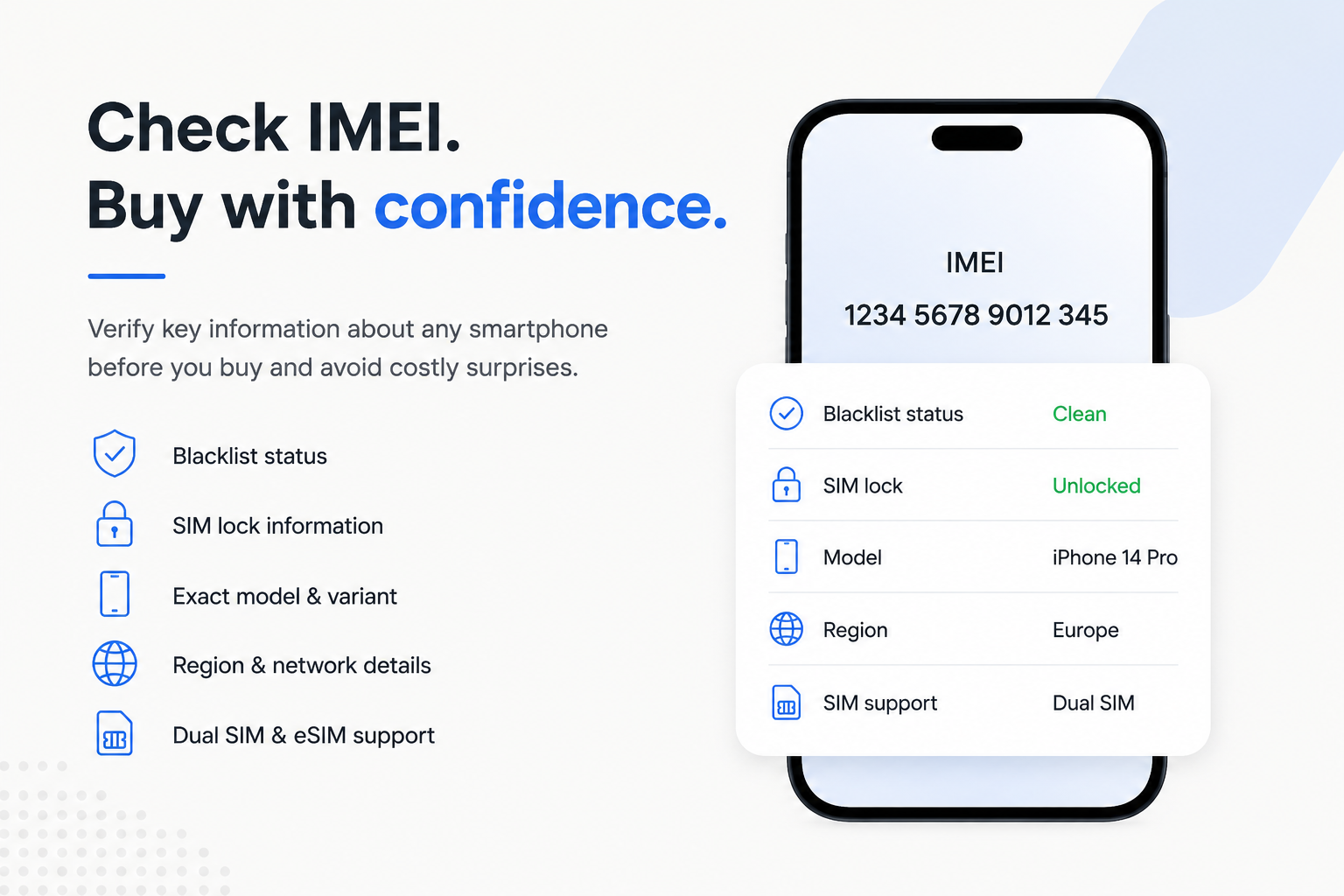
Through an IMEI check, users can often verify:
• exact phone model
• blacklist status
• SIM lock information
• region and storage variant
• dual SIM or eSIM support
This makes IMEI extremely useful when buying used devices.
The risks of buying without checking
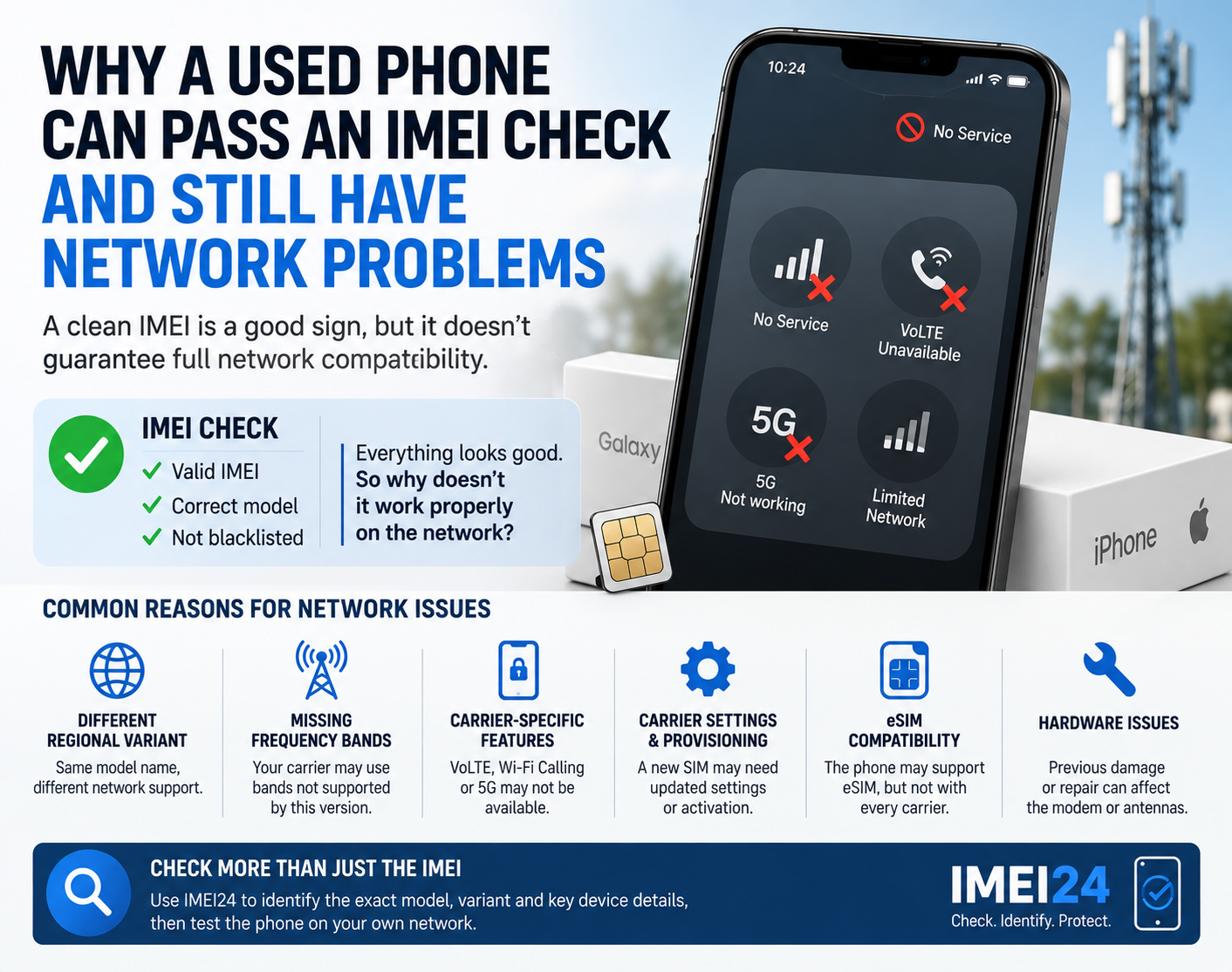
A phone may look perfect physically but still have hidden issues.
Common problems include:
• devices reported as lost or stolen
• carrier blacklists
• unpaid contracts
• activation locks linked to previous owners
Without checking IMEI first, buyers often discover these problems too late.
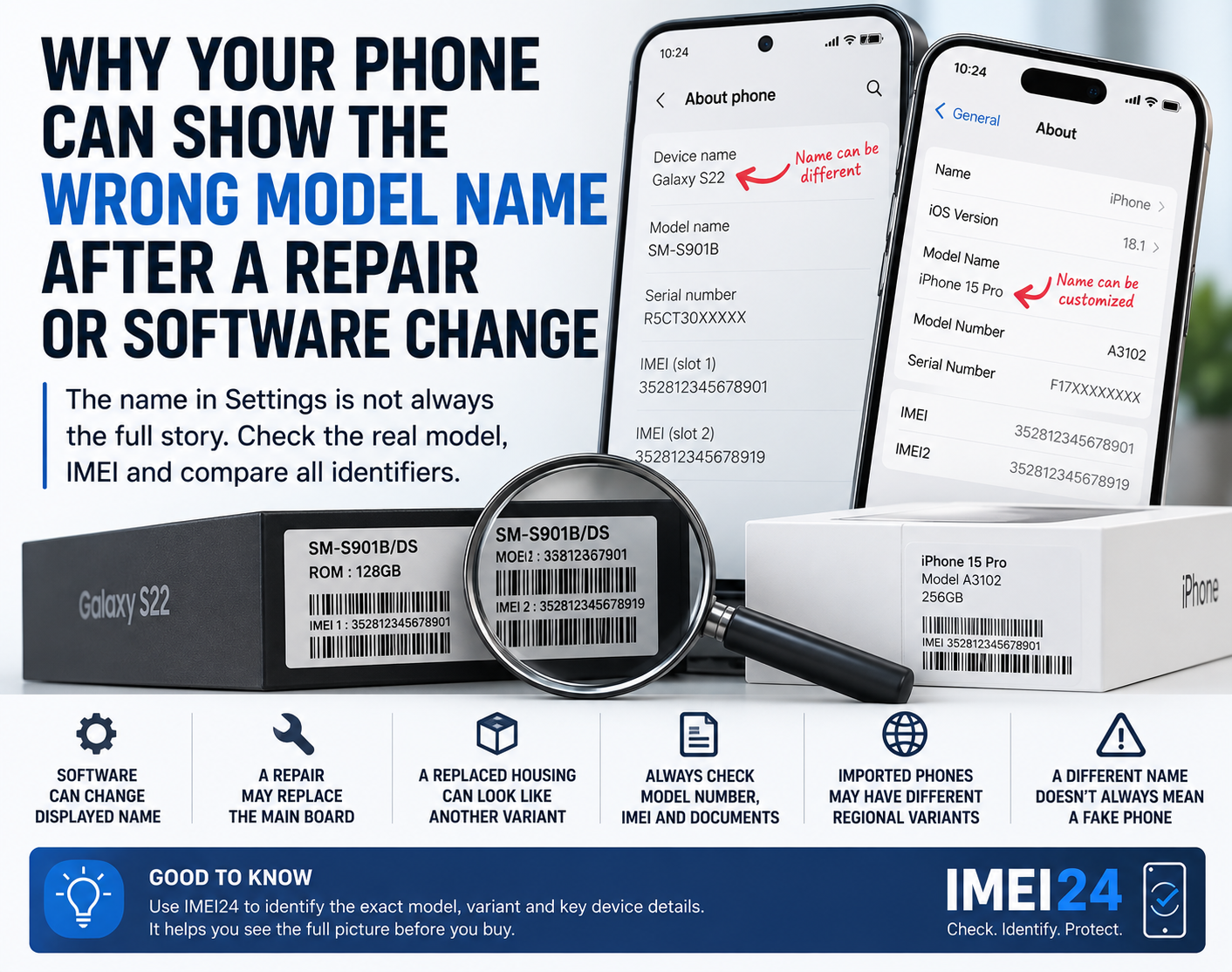
IMEI1 and IMEI2 - why modern phones have two numbers
Modern smartphones increasingly support dual SIM and eSIM technology. Because of this, many devices now have:
• IMEI1 - primary network identifier
• IMEI2 - secondary SIM or eSIM identifier
Both numbers can have separate statuses, which means checking only one is not always enough.
Why IMEI checking matters more today
Smartphones are becoming more complex every year. Security systems are stronger, account protections are stricter, and mobile networks rely heavily on device identification.
This means IMEI verification is no longer just for technicians or advanced users. It has become an important step for ordinary buyers as well.
How IMEI24 helps users
Platforms like IMEI24 allow users to quickly verify key information about smartphones before making a purchase.
Instead of relying only on seller descriptions, buyers can confirm whether the device information actually matches reality.
This helps users:
• reduce risk
• avoid blocked devices
• make safer buying decisions
In many cases, a simple IMEI check can prevent expensive mistakes.
The future of smartphone verification
As eSIM adoption grows and security systems become more advanced, device verification tools will become even more important.
Users want transparency before spending money, especially in the used market.
IMEI verification is becoming part of the normal buying process - just like checking mileage before buying a car.
Final thoughts
In 2026, buying a smartphone without checking the IMEI first is becoming increasingly risky.
A few seconds spent verifying a device can reveal critical information that is impossible to see from photos alone.
For modern buyers, IMEI checking is no longer optional - it is simply smart buying behavior.