Why Battery Life Still Feels Like the Biggest Smartphone Problem
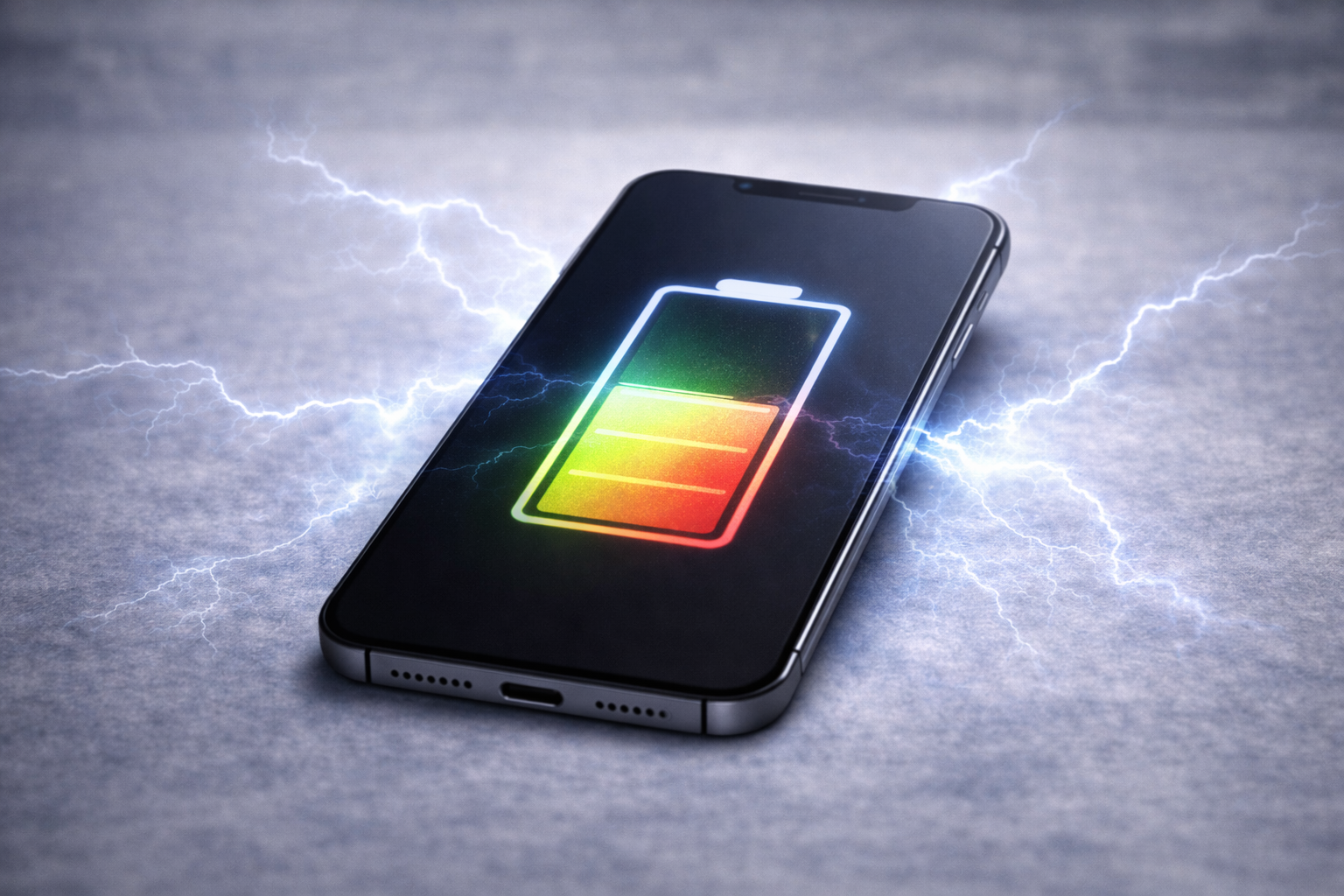
For years, smartphones have become faster, smarter, and more capable. Displays are brighter, cameras are more advanced, and processors rival the performance of laptops from only a few years ago. Yet despite all this progress, many users still feel that one problem remains frustratingly familiar: battery life.
Even the most modern devices sometimes struggle to last comfortably through a full day of heavy use. This raises an interesting question. If smartphone technology has improved so dramatically, why does battery life still feel like a limitation?
The Limits of Battery Chemistry
One of the main reasons lies in the chemistry of lithium-ion batteries. While processors and software evolve rapidly, battery technology improves at a much slower pace. Over the past decade, batteries have become slightly more efficient and safer, but the fundamental chemistry has not changed dramatically.
This means manufacturers cannot simply double battery capacity without making devices thicker and heavier. Instead, they must find ways to balance performance, design, and battery size within a limited physical space.
More Powerful Hardware Uses More Energy
Modern smartphones contain far more powerful components than earlier generations. High-resolution displays, advanced camera systems, AI processing units, and powerful graphics chips all require energy to operate.
While these technologies improve the user experience, they also increase overall power consumption. As phones gain new capabilities, battery demands rise as well, often offsetting improvements in efficiency.
The Hidden Cost of Bright Screens
Displays are one of the most energy-hungry parts of a smartphone. Large OLED and high-refresh-rate screens deliver smooth animations and vivid colors, but they also consume significant power, especially at high brightness levels.
Features such as always-on displays, adaptive refresh rates, and HDR content make screens look impressive, yet they also place continuous demands on the battery.
Constant Connectivity
Modern smartphones are rarely idle. They maintain connections to mobile networks, Wi-Fi, Bluetooth devices, and location services simultaneously. Notifications, background updates, and cloud synchronization happen constantly throughout the day.
This permanent connectivity improves convenience but ensures that the phone is almost never truly resting, gradually draining energy even when not actively used.
Software and Background Activity
Applications today are more complex and more connected than ever. Many apps run background processes for messaging, location tracking, data synchronization, and notifications. Even when the user is not interacting with them directly, these processes continue consuming resources.
Operating systems try to manage this activity intelligently, but the sheer number of apps and services can still impact battery performance.
Fast Charging vs Long-Term Battery Health
To address battery concerns, manufacturers introduced fast-charging technologies that can restore significant power in minutes. While this makes charging more convenient, it does not necessarily increase how long a battery lasts between charges.
In fact, rapid charging generates heat and can gradually affect battery longevity over time if not carefully managed. As a result, energy management remains a delicate balance between convenience and durability.
The Role of Software Optimization
Because battery chemistry evolves slowly, much of the progress in battery life now comes from software optimization. Modern operating systems analyze usage patterns and adjust performance, background activity, and screen behavior to conserve power when possible.
These invisible improvements often extend battery life without requiring larger batteries, but they rarely produce dramatic changes noticeable to users.
Conclusion: A Problem That Evolves With Technology
Battery life remains one of the most discussed aspects of smartphones because it sits at the intersection of design, performance, and user expectations. As devices become more capable, they naturally require more energy to support their features.
Instead of a single breakthrough solving the problem, battery life continues to improve through gradual refinements in hardware efficiency, software optimization, and smarter power management.
The challenge has not disappeared — it has simply evolved alongside the technology that makes smartphones so powerful today.